The story of Nasrin*: A deadly shipwreck, border violence and systemic protection gaps
A case that sheds light on the consequences of unlawful pushbacks and the serious failures to safeguard life at the Greek and European borders
“I kept thinking: if only, if only… I had a place that was home… my own home and my homeland.”
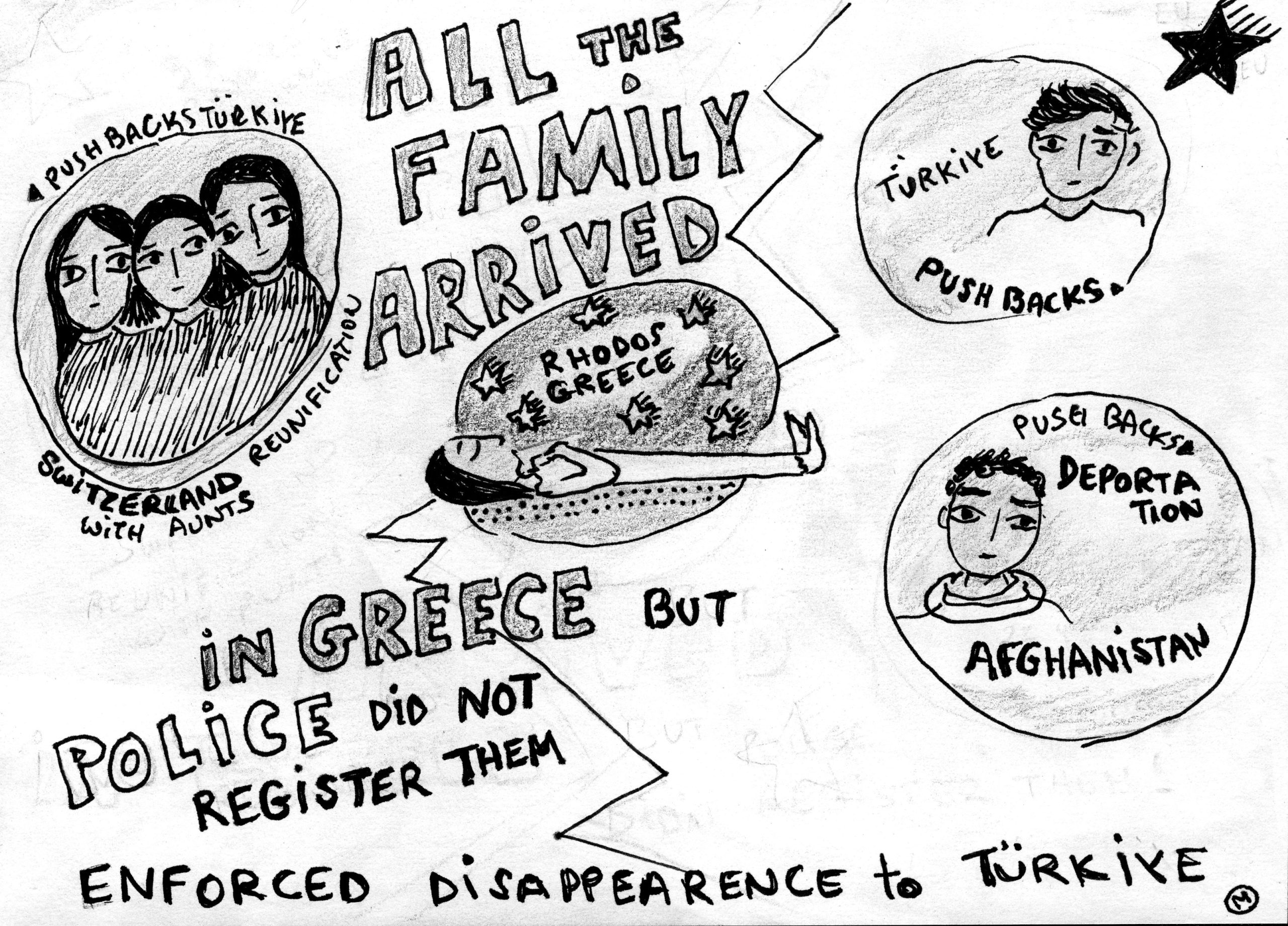
Today, 18 December, marking this year’s International Migrants Day, we publish a harrowing account. It is the story of Nasrin*, an Afghan mother who drowned in November 2024 in a shipwreck off Farmakonisi and was buried far from her homeland, on the island of Rhodes. A few months earlier, Nasrin* had been forcibly and informally deported, together with her children, by the Greek authorities via the Evros land border. This is also the story of her five children: an underage boy, today unaccompanied in Türkiye; an adult son eventually deported to Afghanistan; and three daughters (two of them underage) who have since been recognised as refugees and are now in Switzerland. Five children living apart, carrying the trauma of gender-based violence, border violence, and the death of their mother, unable to rebuild their lives without the necessary support framework and the protection they are entitled to.
Sketch: Marily Stroux
On 23 November 2024, the death of Nasrin*, a widow and mother of five from Afghanistan, in a shipwreck near Farmakonisi exposed a chain of unlawful short-term enforced disappearances and pushbacks, denial of access to the asylum procedure, repeated separations, and severe protection gaps at the Greek and European borders. Her family in Switzerland reached out to Refugee Support Aegean (RSA) seeking legal assistance. RSA has been representing Nasrin’s* family from the very first moment after her death, supporting them legally and socially throughout all subsequent stages.
The family’s first pushback to Türkiye via the Evros river
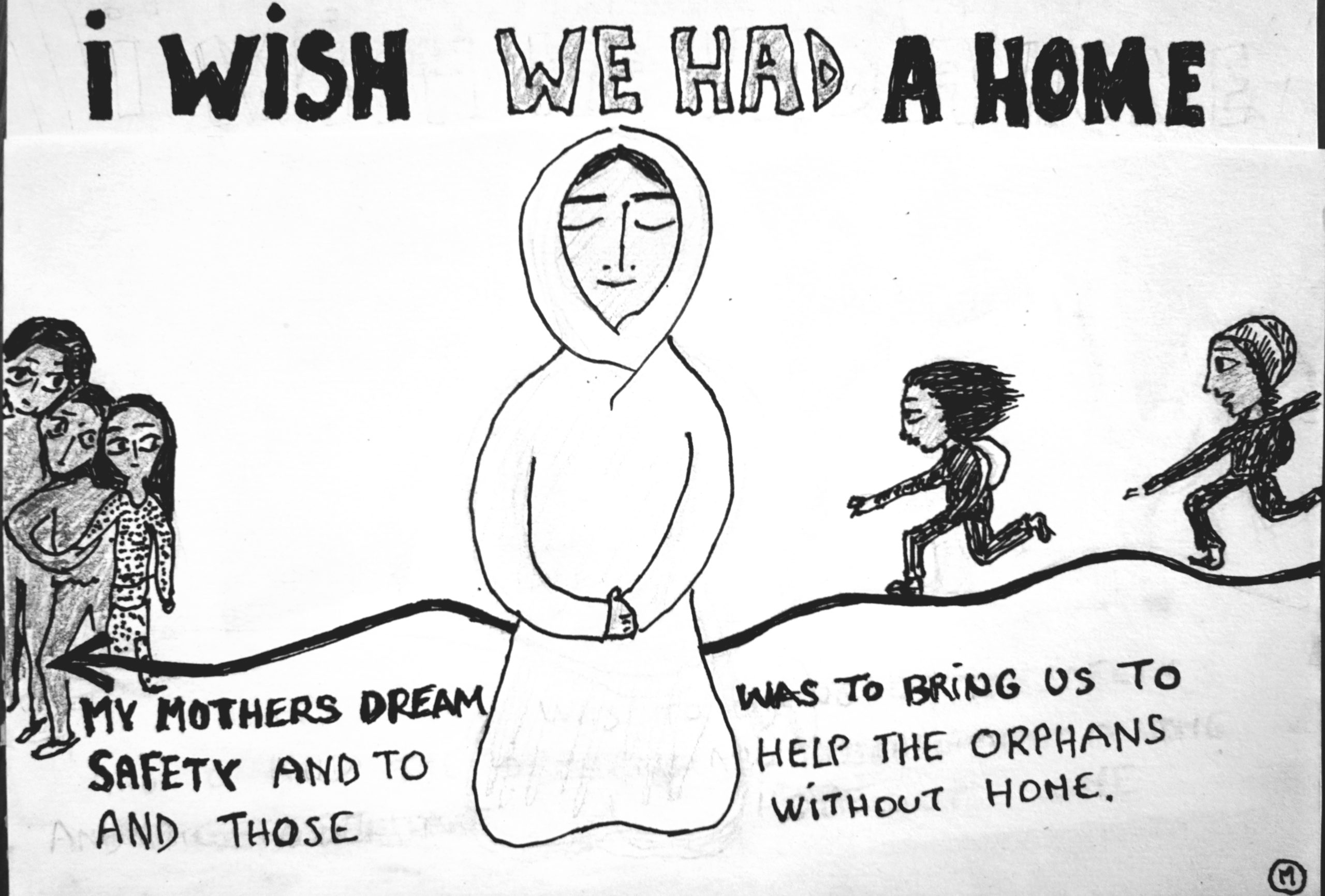
“Our mother had a big dream to help orphans. She would say that once we reached safety, she wished with all her heart to help those without a father or mother, those without a home.”
Sketch: Marily Stroux
Nasrin* was a single parent, a refugee from Afghanistan, and a survivor of gender-based violence in Türkiye. She was forced to leave Türkiye and, in October 2024, entered Greece irregularly together with her four children (one adult daughter, two underage daughters, and one underage son), as well as two of her siblings (and their young children), seeking international protection.
“When we first tried to reach Greece from Türkiye, we were hoping to find a country that respects the law, where we would no longer be in danger of forced (child) marriage, rape, or deportation. We hoped to reach a place where we could go to school and live happily as a family. Our mother wanted to save us by bringing us to Greece, but from there we were deported again.”
Nasrin*, her children, and the rest of her family reached Thessaloniki and sought legal assistance from a non-governmental organisation in the city in order to lodge their asylum application. At that time, however, the Ministry’s online registration platform (a prerequisite for obtaining an appointment and accessing the competent First Reception Centre) was not functioning. As a result, they were unable to access the first reception system and the asylum procedure. Nasrin* and the other family members even presented themselves in person at the Diavata RIC, requesting asylum.
According to the family’s account to us, the following then occurred: they were told on the spot that the police would come to collect them for registration, and indeed they were arrested by police officers who arrived at the RIC. However, no official registration of their details took place; their mobile phones were taken and never returned; and they were secretly detained in a police station, with no possibility of contact with the outside world. The next day, they were moved from one detention site to another and ultimately to the Evros river, where they were forced onto an inflatable boat and returned to Türkiye. Nasrin* suffered from asthma, and the children asked for help. No one assisted them. Their presence and their informal, forced return were never recorded by the Greek authorities.
“When we arrived at the refugee camp, I thought: please let us enter, give us papers, a shelter, help us! I felt safe at first, because I thought the people there would listen to us and understand our pain. I didn’t know they would call the police and hand us over to them. I didn’t know they were lying to us and that, in the end, they would send us back. … My mother sensed something was wrong and became scared. But my uncle replied that even the camp’s interpreter had said we should go with the police to be registered and get papers. He said they were surely following the law here. But when the police car arrived, the officers grabbed my uncle and forced him into their van. Our uncle shouted to us: Don’t come. Don’t come! We screamed. My mother fainted. The security guards at the camp’s gate told us we had to go with the police. They said there was no way to escape.”
The term used internationally for people secretly detained by state authorities with the aim of forcibly and informally returning them is “short-term enforced disappearance”. RSA recalls that, although the Greek authorities deny engaging in short-term enforced disappearances and informal returns, repeated reports and relevant case law of the European Court of Human Rights (for example, the case of A.R.E. v. Greece κ.α.) and others) confirm that pushbacks at the Greek borders form part of a systematic practice by the Greek authorities.
INFOThe violent separation of the family and the shipwreck off Farmakonisi that cost the mother her life
A few weeks later, the family attempted once again to reach Greece, but its members were separated against their will in Türkiye by the smugglers. Nasrin*, together with two of her daughters (one underage and one adult) and other relatives with their young children, boarded a boat that, on 23 November 2024, sank off Farmakonisi. Nasrin* was lost at sea.
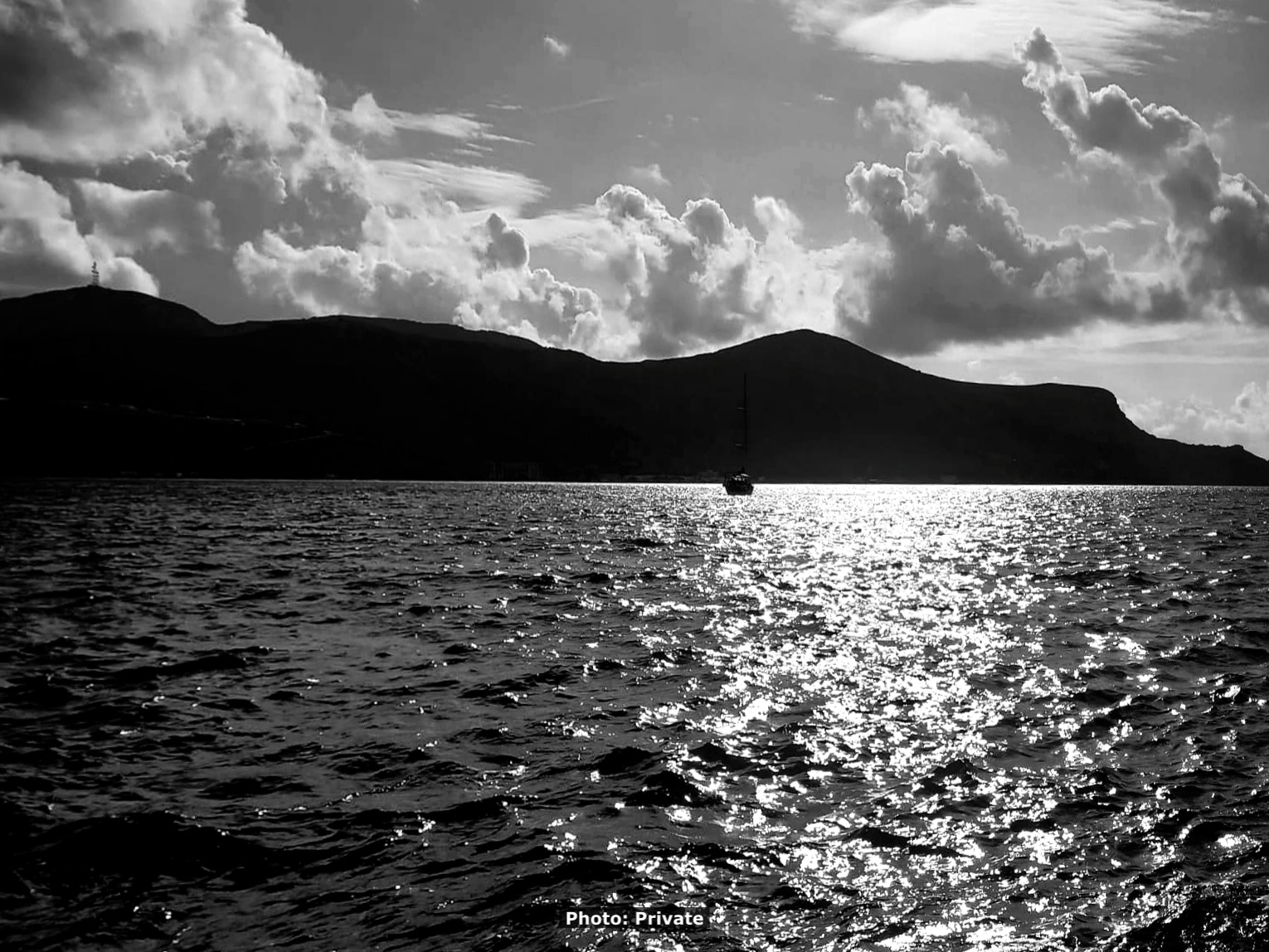
Photo: Private
Her two daughters were rescued and transferred for hospitalisation to the Leros hospital. While mourning their mother, who remained missing at sea, they experienced first-hand the absence of an effective system in Greece for supporting shipwreck survivors and the relatives of the missing. The hospital was on emergency duty with limited staff, as also highlighted by the Leros Hospital Doctors’ Union: “The only reason our fellow human beings received the best possible care was the dedication and solidarity shown by all colleagues, who rushed to the hospital even though they were not on duty, so that we would not mourn additional victims,” they stressed.
“I opened my eyes and realised I was in the hospital. The doctors were kind. My auntie was in the room next door. They treated us well in the hospital… but I was so scared. I had nightmares all the time. I kept being reminded of what had happened at sea.”
After their hospitalisation, the two girls were transferred, consecutively, to the Leros CCAC. The younger daughter (then aged 13), still in shock after what had happened, stayed in the CCAC’s safe zone. During those first tragic days following the shipwreck and the loss of their mother, her communication with her relatives, themselves also survivors of the shipwreck, was extremely limited and only through the railings. The information provided to the two girls regarding their missing mother was minimal.
“My little sister told me that being separated from us after everything that had happened was unbearable for her. She couldn’t sleep at night. When she was finally brought to me, the first thing she did was hug me tightly.”
We note that the staff of the Leros CCAC acted with particular dedication and support in this case (too), although their highly positive contribution could not, of course, compensate for the serious shortcomings stemming from systemic gaps in the handling of this and similar shipwreck incidents.
Subsequently, the girls were transferred together to a refugee camp on the mainland.
Repeated pushbacks within days: Τhe odyssey of the children searching for their mother
In the meantime, on 2 December 2025, the other two underage children (a girl and a boy) who had been separated from their mother without their consent in Türkiye and whose whereabouts had remained unknown, irregularly entered Greece together with their adult brother, seeking international protection, legal assistance and reunification with the rest of their family. RSA was informed by their other family members and represented the siblings before the European Court of Human Rights (ECtHR). The Court issued interim measures ordering the authorities “to locate the applicants, to not remove them from Greece, to provide them with food, water and medical care and to give them access to international protection procedures.” The Greek authorities claimed that they had been unable to locate them.
However, three days later, on 5 December 2024, the underage girl contacted RSA’s lawyers and informed us that the three children had in fact been located and informally arrested by the Greek authorities, and had once again been pushed back to Türkiye. She described the violent and traumatic nature of their informal and forced return, and told us that during the operation she and her adult brother were separated from their younger brother. The latter remained missing, without any sign of life, until 9 December 2024, when he was finally able to contact his family and inform them that he was safe.
“The only thing giving me power to move on and try again to reach Greece was the thought of my mother. I wanted to be with her again. My brothers and I tried a second time, but we were returned again. We stayed in the ‘jungle’ [Note: meaning the forest]. In the morning, suddenly, the Greek authorities arrested us and handed us over to some people who spoke Afghan, with the aim of deporting us to Türkiye - which they did. Meanwhile, my small brother got separated from us. I was very scared and worried. For days we had no news of him. I kept crying, thinking about what might have happened to him.”
The children did not know about their mother’s death and were desperately seeking to reunite with her.
Note: According to reports, pushbacks in the Evros region often involve the assistance of foreign individuals acting in cooperation with the Greek authorities, carrying out the identification or physical removal of people by crossing the Evros River using watercraft. Notably, the 2024 Annual Report of the Recording Mechanism of Informal Forced Returns of the Greek National Commission for Human Rights (NCHR) records testimonies according to which non-uniformed individuals involved in the physical removal reportedly acted in coordination with the authorities (in at least 30 incidents) and spoke languages also spoken by the victims themselves, such as Arabic, Farsi/Dari, Pashto, Turkish, and Urdu (see pp. 38–39).
INFOThe adult brother was arrested by the Turkish authorities and, without access to legal assistance, was deported to Taliban-controlled Afghanistan.
The girl attempted once again to return to Greece via the Evros river but was pushed back for a third time. She eventually reached Rhodes alone in early January 2025, and was transferred to the CCAC of Leros on 5 January 2025. By that time, her two sisters, who had reached Leros after the shipwreck, had already been transferred to a refugee camp in mainland Greece, meaning the three girls were not reunited then either.
“What happened then affected my soul very badly. Until today I suffer from that. After the Greek authorities arrested us, they handed us over to a group of Afghans to deport us across the river. One of them kept touching me inappropriately; he harassed me, and I was completely helpless… Then they pushed us back to Türkiye again. When I finally reached Greece, the only thing on my mind was that I needed to see my mother to tell her about the pain and the difficulties I had suffered on the way, all alone. I wanted to open my heart to her. Unfortunately, that never happened. She was no longer alive.”
The children’s younger brother remains to this day unaccompanied and without protection in Türkiye. In his recent communication with us, he reported that on 18 October 2025 he was again arrested by police forces inside Greek territory while being transported by smuggling networks within Greece. Instead of being registered by the Greek authorities and having the process of family reunification initiated, he was informally returned once again to Türkiye. The Greek authorities disregarded both the interim measures of the ECtHR prohibiting his return to Türkiye and his need for child protection, leaving him unprotected again.
“Today we continue to be sad. Our big brother could not save himself and escape Afghanistan, and our little brother is still all alone. I worry about him every day.”
The funeral of Nasrin*
The body of the mother, Nasrin*, who had been lost in the shipwreck of 23 November 2024, was found on Kalymnos and identified through DNA in early 2025. Her funeral took place on 30 January 2025 in Rhodes, at the city’s Muslim cemetery, where her three daughters (the underage daughter who had arrived later and was staying at the Leros CCAC, and the other two daughters, one adult and one underage, who had survived the shipwreck and were now living together in a refugee camp in mainland Greece) met for the first time after everything they had been through, when they were finally able to travel and say their goodbyes.
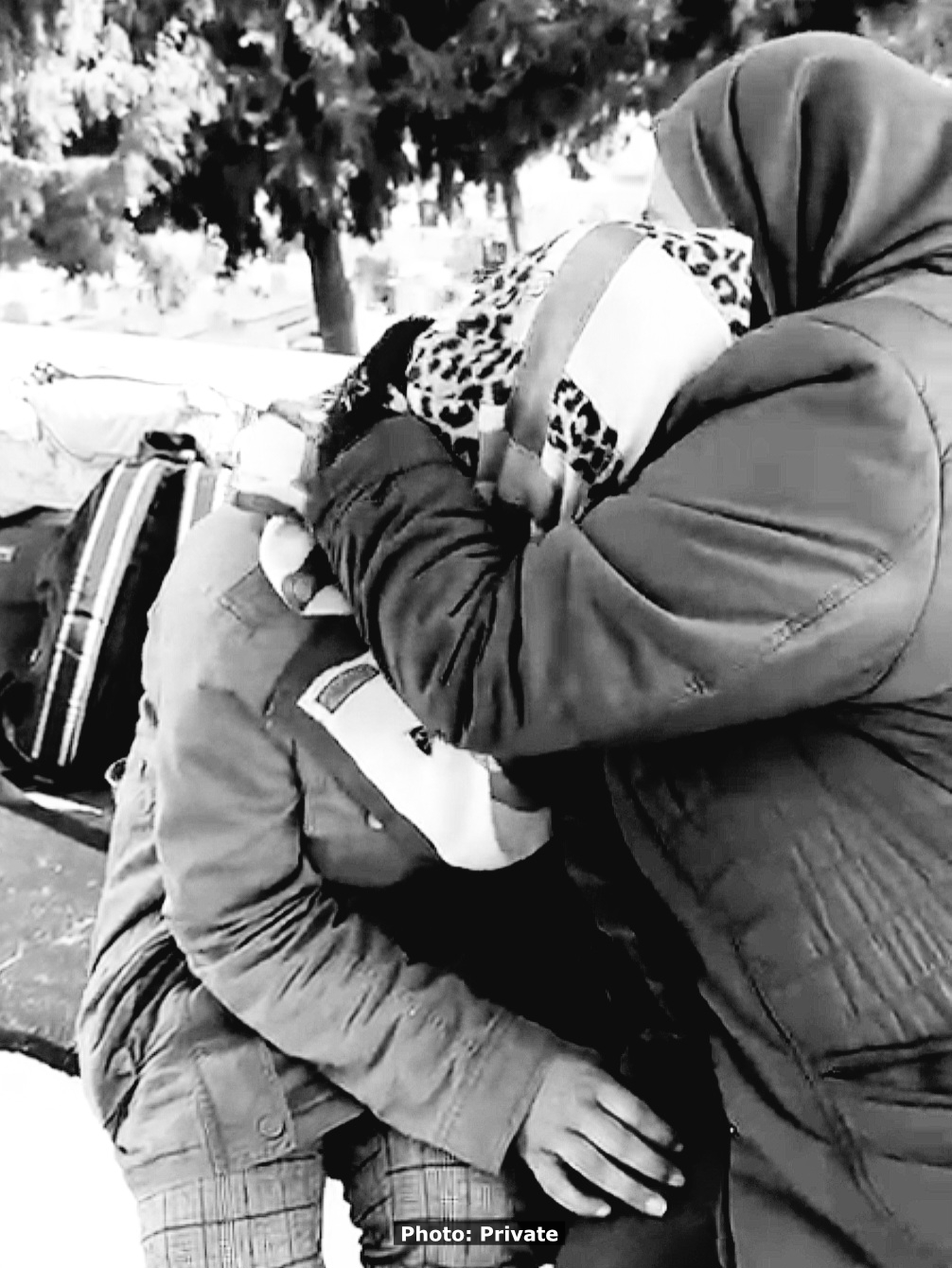
Photo: Private
"When I first met my sisters again we were very happy. We hugged each other. I didn't know yet that we had lost our mother. I learnt that only later... Even today, I still have the need to tell my mother that we love her so much and we will never forget her!”
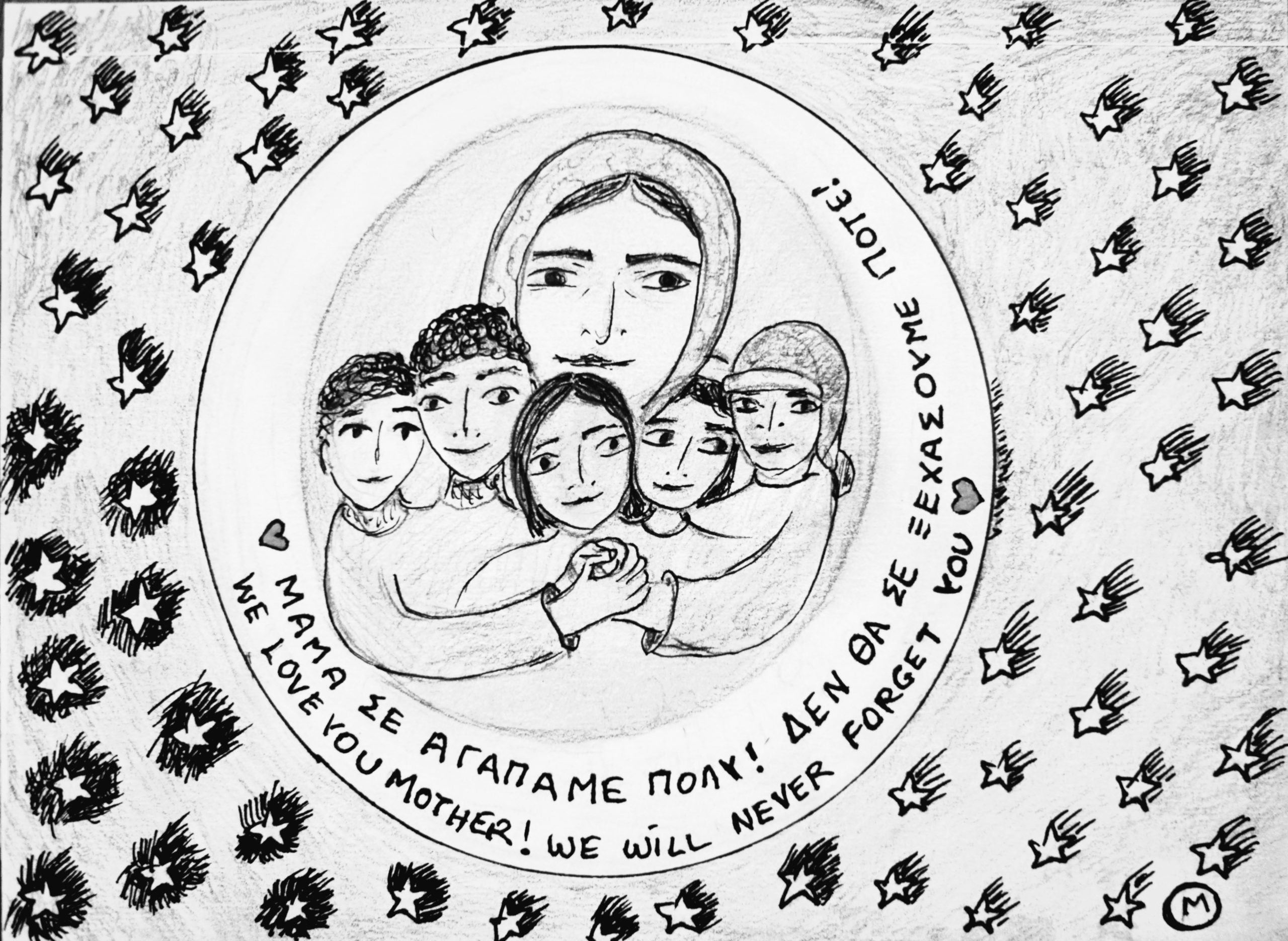
Sketch: Marily Stroux
The journey and presence of the three -at least- children at their mother’s funeral would not have been possible without the solidarity, and the humanitarian and financial support of individuals and organisations. The family had no financial resources to cover the funeral themselves, not even for the daughters of Nasrin* to attend. Moreover, until the very last moment, the youngest daughter, who had arrived alone in Greece and was staying alone at the Leros CCAC, had no knowledge of her mother’s death. She only learned about it upon arriving in Rhodes for the funeral; even on the ferry to Rhodes, she believed she was being taken to meet her mother.

Sketch: Marily Stroux
"When we spoke with the girl via video call, after her unlawful deportation to Türkiye, I realised she had no idea what had happened to her mother. She kept telling us how much she missed her, and crying, asked us to help them reunite. The same happened with the boy, when we spoke to him later; it was very hard to bear… I kept thinking, moreover, that just one month earlier, their mother had arrived in Greece with them and had sought asylum for herself and her children from the Greek authorities, but instead of protection, they were all unlawfully deported to Türkiye, from where they were trying to escape. I was thinking that this mother could have been alive and the family could be united today."
Finally, the three daughters were admitted to Switzerland as part of their family reunification with their aunt under the Dublin Regulation, and they now reside there permanently.
A story exemplifying systematic violations and violence at Greece’s borders
Nasrin* lost her life at the borders of Europe while trying to seek asylum and secure international protection and safety for herself and her family. Her children continue to live separated, with the three daughters in Switzerland, an underage son still unaccompanied in Türkiye, and an adult son who has been deported to Afghanistan.
The case of Nasrin* and her family highlights how the systematic practice of unlawful pushbacks and the absence of effective protection mechanisms lead to human tragedies; up to and including death. Behind these tragedies are broken families and children exposed to violence and uncertainty.
"I want to tell the world that Türkiye violates Afghans’ human rights. I wish all Afghan women could be safe, and could live in safety. I wish European governments would listen to voices like mine. Listen to the pain and suffering of women, girls, and children. Deporting people is very painful, and they need to know that."
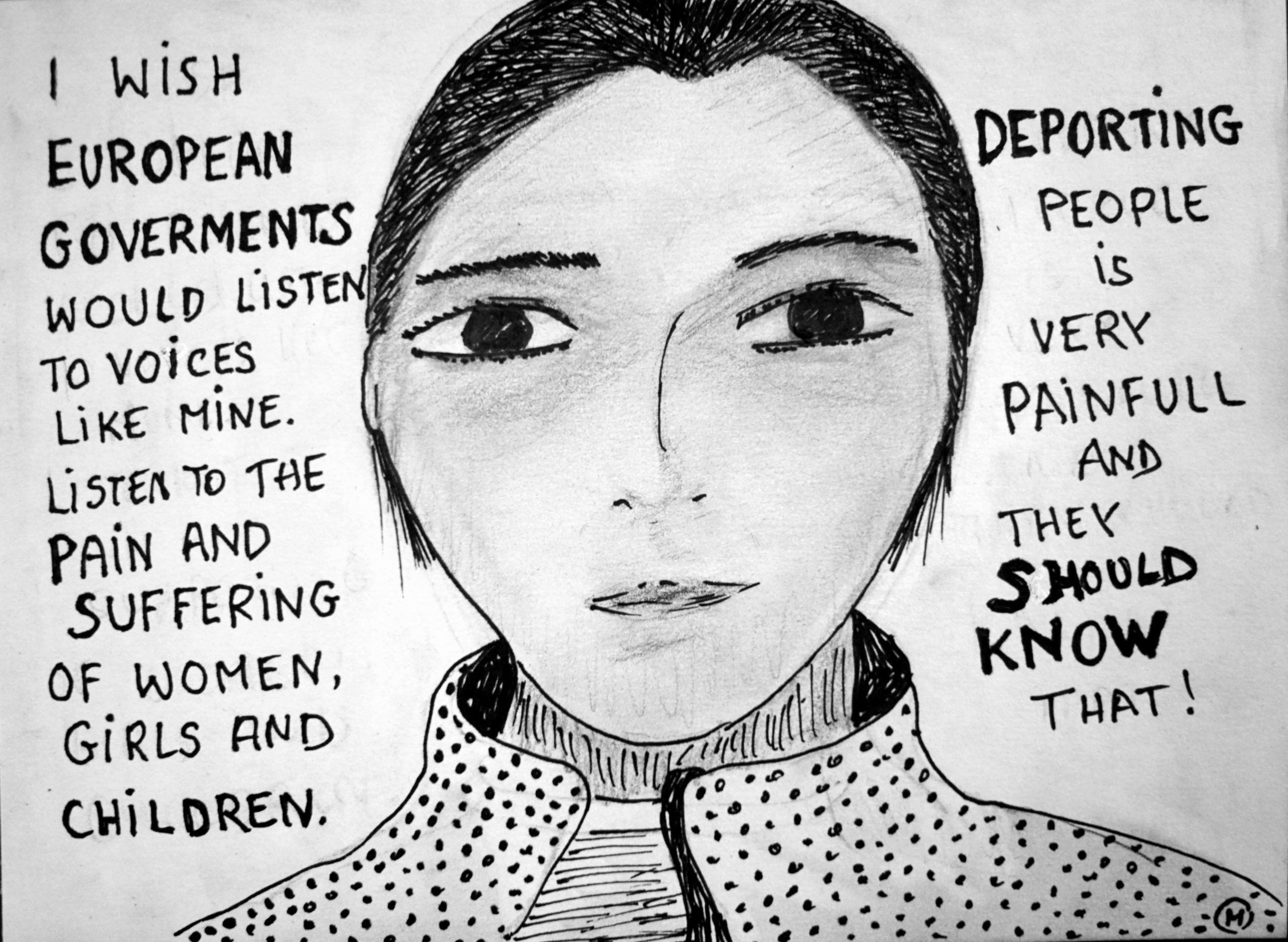
Sketch: Marily Stroux
Refugee Support Aegean (RSA) systematically provides legal assistance in cases of individuals who have experienced short-term enforced disappearances, violence and unlawful deportations at the borders, as well as for people at risk of removal from Greece due to being denied access to the asylum procedure. At the same time, we support survivors of shipwrecks and relatives of missing persons at every stage, while highlighting the lack of an effective system to protect survivors, register the missing, and keep families informed. Moreover, we provide legal assistance in asylum and family reunification cases for individuals belonging to vulnerable groups, such as shipwrecks’ survivors.
As a civil society organisation, we want, once again and prompted by this harrowing story, to underline the importance of solidarity among people, regardless of colour, race, gender, religion, nationality, or legal status, and the fundamental value of humanity.
*Names have been changed to protect safety and privacy.