
“Now is NOT the time to talk about legality”
The state of the Rule of Law in Greece today
CONTENTS
Executive summary
Urgent action is needed to address the longstanding rule of law concerns in Greece. Independent organisations HIAS Greece, Refugee Support Aegean (RSA), Vouliwatch, Greek Council for Refugees (GCR), Hellenic League for Human Rights (HLHR), Homo Digitalis, Reporters United and Solomon track the systemic failings of Greek institutions in their latest annual report. These flaws are interconnected and have nefarious effects on an array of facets of the rule of law, from justice, law-making and transparency rules to press freedom, civil society and data protection.
Justice denied against state wrongdoing
The Greek judiciary still lacks the necessary independence, impartiality and effectiveness to investigate unlawful conduct by state officials. These flaws are consistently illustrated in criminal cases that continue to test the public’s declining trust in the courts:
- The “Greek Watergate” surveillance scandal is being adjudicated by the Single-Judge Misdemeanour Court of Athens only for four private individuals charged with misdemeanours, over one year after the Supreme Court Prosecutor ruled out the existence of a joint National Intelligence Service (EYP) and Predator surveillance operation targeting ministers, opposition politicians, journalists, businesspeople, EYP employees and high-ranking military officials. An abundance of evidence emerging during the trial corroborates the existence of a joint EYP-Predator surveillance centre. The hearings have shown critical gaps in investigative measures on the part of the prosecution e.g. failure to summon and question the individuals allegedly operating the Predator spyware or removing Intellexa servers after the outbreak of the scandal, and undue interference and instructions in the technical report delivered by two experts to the Supreme Court Prosecutor three days before the investigation was shelved as far as state officials were concerned.
For its part, EYP has still not complied with the Council of State judgment that declared as unconstitutional the legislative provision prohibiting the opposition leader from being informed of his surveillance. The case is pending before the European Court of Human Rights (ECtHR).
Impermissible access of senior government officials to information obtained through surveillance has also emerged in the context of the OPEKEPE agricultural funds misuse scandal investigated by the European Public Prosecutor’s Office (EPPO). The former Deputy Minister of Digital Governance who resigned after the outbreak of the scandal has confirmed that sources close to the Prime Minister’s Office had informed him of his wiretapping as early as June 2024, one year before EPPO transmitted the case file to Parliament to investigate and prosecute ministerial misconduct. In addition, EPPO investigations into the case have faced undue government interference.
- The deadly Tempi train crash that claimed 57 lives on 28 February 2023 brought the public to historic demonstrations with a demand for justice and accountability, met with extreme, unprovoked police repression. Meanwhile, the case marks another investigation marred by systemic shortcomings and indications of interference with the justice system. Investigative steps were fragmented across multiple proceedings, crucial evidence was handled belatedly or inadequately. Repeated requests for exhumation of victims to conduct examinations and to clarify causes of deaths were rejected multiple times, only to be authorised after a victim’s father’s hunger strike but with limited impact on the main case file.
- The de facto policy of violent enforced disappearance of people seeking asylum (“push backs”) continues unabated despite last year’s landmark condemnation from the ECtHR, acknowledgment of the practice by the Court of Justice of the European Union (CJEU), and an abundance of evidence and criticism from all major human rights monitoring bodies at domestic and international level. To this day, no push back case has proceeded beyond the preliminary examination stage, nor has any disciplinary action been taken against Hellenic Police and Hellenic Coast Guard officers. Prosecutors continue to shelve investigations and to dismiss complaints for want of sufficient indications of wrongdoing. Among other investigative flaws, Prosecutors insist on a circular reasoning whereby push backs are not perpetrated by state officials because they are prohibited by law.
- More generally, police violence remains widespread, encouraged by a persistent “culture of impunity” and a failure to deliver justice to victims despite multiple ECtHR condemnations. In January 2026, the Public Prosecutor of Athens shelved the investigation into the death of Mohammad Kamran inside the Agios Panteleimon police station in September 2024, after eight days of detention in multiple police stations across Athens. Despite photographic evidence of signs of extensive abuse and a forensic report showing beatings as a concurring cause of death, the Prosecutor found no indications of wrongdoing on the part of police officers. The case file contained near-identical testimonies from police officers and failed to identify or question the people detained together with the victim. No explanation was offered as to why the surveillance cameras of the police station were not working at the time of the incident.
Persistently poor law-making
Rules on the preparation, submission and adoption of legislation continue to be systematically disregarded. The Greek legislative process remains largely underpinned by polynomia manifested in overregulation through multiple laws, and kakonomia due to poor drafting practices and contempt for good law-making principles.
- More than 250 articles were voted by Parliament without undergoing prior public consultation. Feedback from public consultations and experts’ views are often not adequately considered.
- ‘Omnibus’ legislation remains a prevalent practice. 80% of bills passed last year bore a title that included the terms “and other provisions” and often included extensive regulation of multiple unconnected topics.
- The same goes for late and irrelevant amendments. 51 of the 53 ministerial amendments tabled last year were unrelated to the subject matter of the bill. 44 of the 53 amendments were filed either on the day or the eve of adoption of the law.
- Recurrent modification of laws persists, even for legislation adopted only months earlier. At least 15 laws – even codes – enacted in 2025 underwent amendments that same year. This poses critical risks for legal certainty and accessibility, since consolidated versions of legislation are still not accessible to the public free of charge.
At the bottom of press freedom
Reporters Without Borders (RSF) ranked Greece last in the EU on press freedom for the fourth year in a row. Journalists and media outlets continue to face attacks, threats and intimidation for performing their work. This includes a notable presence of SLAPPs in areas ranging from the “Greek Watergate” surveillance scandal to environmental cases. Greece has not transposed the Anti-SLAPP Directive to date.
Public media, supervised by the Secretariat-General of Communication and Information under the authority of the Prime Minister, remain vulnerable to political interference. Non-compliance with objectivity principles has been reported in the Hellenic Broadcasting Corporation (ERT) coverage of public interest matters such as the Tempi train crash demonstrations.
Concentration of private media in the hands of wealthy families and shipping magnates with close political affiliations has affected the media environment. Rules that would have entrusted the National Council for Radio and Television (NCRTV) with the duty to assess media market concentration were ultimately dropped from domestic legislation implementing the European Media Freedom Act. Access to media ownership information recorded on the Registry of Beneficiaries is constrained by requirements to demonstrate special legal interest.
Dormant anti-corruption rules
Corruption remains prevalent in both public opinion and practice, as fundamental weaknesses in transparency mechanisms and institutions have yet to be fully addressed.
- Lobbying rules still exclude in-house lobbyists, while registration of lobbyists and declared meetings on the Transparency Register remains worryingly low.
- Disclosure of gifts to politicians remains elusive. Gifts to MPs are not available on a public register, whereas gifts to Ministers and Deputy Ministers were again made public only after an unanswered request for access to information.
- Asset declarations are not promptly accessible on account of constant deadline extensions introduced through irrelevant amendments, and delays in publication.
- The Committee for the Investigation of Declarations of Assets (CIDA) has shown inconsistencies in fulfilling its statutory obligations, while requests for access to information rarely elicit a response.
Civil society attacked and criminalised
The government has taken no steps to alleviate longstanding concerns voiced by EU, Council of Europe and UN bodies against the hostile environment, intimidation and disproportionate registration requirements faced by civil society organisations, especially those working with refugees and migrants. On the contrary, the Migration Ministry has publicly attacked organisations for representing individuals before the ECtHR and has spearheaded a reform rendering the mere membership of a registered NGO an aggravating circumstance for immigration offences that leads to 10-year imprisonment terms and tens of thousands of euros in fines. Facilitation of “illegal stay” by an NGO worker is punished more severely than torture.
Data protection flouted
Important decisions from the Hellenic Data Protection Authority (DPA) highlight yet again the limited consideration paid to the protection of personal data, from the roll-out of police facial recognition systems to data retention policy implemented by telecommunications providers. Meanwhile, the prior DPA decision on surveillance systems in refugee camps remains unimplemented and is pending judicial review before the Council of State.
***
Our organisations have submitted this report to the European Commission and have continuously and closely engaged with its Rule of Law Report process with thorough documentation of pervasive, interconnected issues and deficiencies within Greek institutions as we experience them in our daily work and reality.
Yet, the state of Greek institutions depicted by the European Commission varies dramatically from the findings we convey each year. The flaws in the Commission’s assessment of rule of law issues in Greece provide fertile ground for the Rule of Law Report to be relied upon in support of a domestic narrative of overall improvement, despite the persistence of serious and longstanding structural deficiencies.
We will continue to defend the rule of law in Greece and to contribute with the reality we experience to the available official monitoring processes through detailed and substantiated findings.
We expect no less from the institutions tasked with safeguarding it.
Press Conference
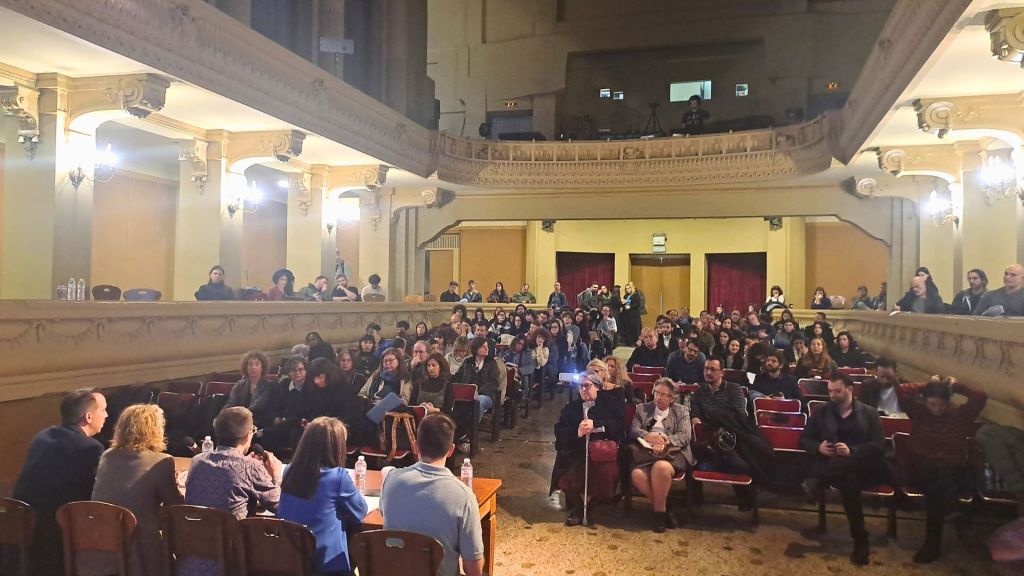
Athens, 11 February 2026
Press Release
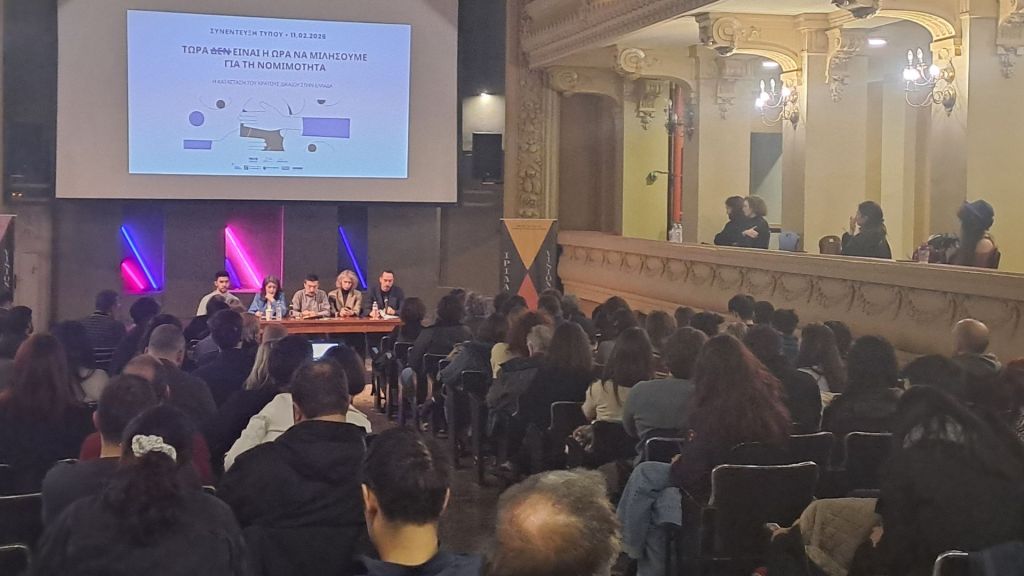
On Wednesday, 11 February, a press conference on the current state of the Rule of Law in Greece was successfully held with significant attendance at the Irida Cinema Theatre. The event was organised by the independent organisations HIAS Greece, Refugee Support Aegean (RSA), Vouliwatch, the Greek Council for Refugees (GCR), the Hellenic League for Human Rights (HLHR), Homo Digitalis, Reporters United and Solomon.
You may watch the press conference here.
We would like to warmly thank omniatv for the organisation and online hosting of the press conference, as well as the Photography Department of POFPA for hosting the event at the Irida Cinema Theatre.
Representatives of the participating organisations presented the key findings of the joint submission that we submitted for the fourth consecutive year to the European Commission on the Rule of Law in Greece in 2025, as part of the Commission’s annual monitoring of national systems.
We underlined the now urgent need to address the longstanding rule of law concerns in Greece. The issues documented in the report are interconnected and have nefarious effects on an array of facets of the rule of law, from justice, law-making and transparency rules to press freedom, civil society and data protection.
Our organisations have submitted this report to the European Commission and thoroughly document the pervasive, interconnected issues and deficiencies within Greek institutions as we experience them in our daily work and reality. We will continue to defend the Rule of Law in Greece. We expect no less from the institutions tasked with safeguarding it.
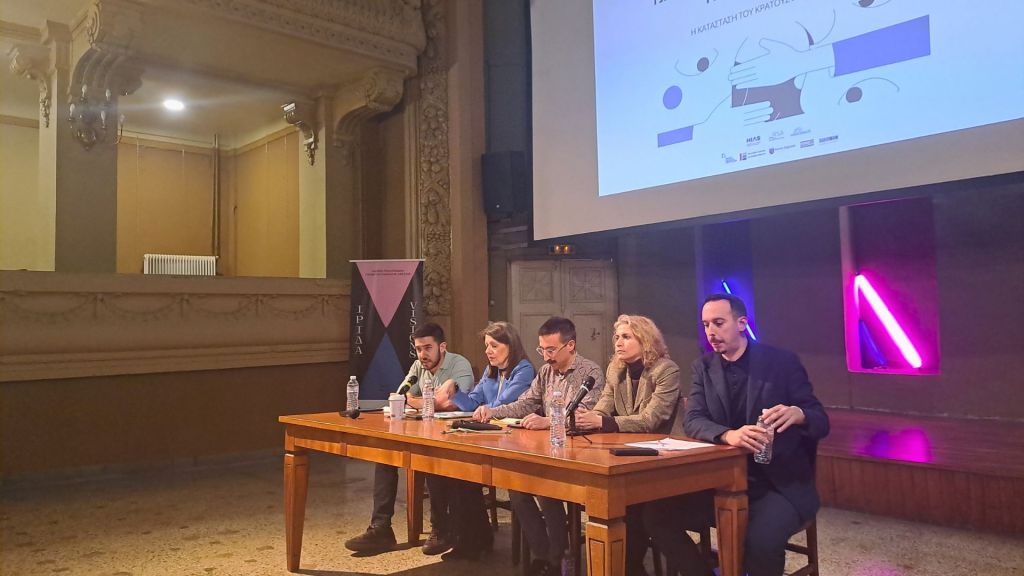
In presenting the report, Stefanos Loukopoulos, Director of Vouliwatch, stated: “The Rule of Law is founded on institutions that operate independently, on procedures that are consistently followed, and on rights that are effectively protected. Once again this year, our report highlights troubling trends that put these fundamental prerequisites at risk. At a time when institutional checks and balances appear fragile, and when illegality risks becoming normalised, the role of civil society is to act as a guardian of democratic institutions. Not from an ideological standpoint, but from the conviction that democracy requires constant vigilance and scrutiny of power.”
This was followed by an intervention from Minos Mouzourakis, lawyer at Refugee Support Aegean (RSA), who noted: “The demand for an independent and genuine investigation and for accountability is urgent and collective, from Pylos to Tempi, from the waters off Chios to the servers of the surveillance scandal. Until this country becomes a state governed by the rule of law and a just state for each and every one of us.”
Finally, Danai Maragoudaki, journalist at Solomon, emphasised: “In recent years, there have been frequent debates about the independence of the media and the concentration of media ownership in the hands of a few business interests. In Greece, genuine pluralism remains elusive. A healthy democracy presupposes an independent press that can hold power to account without fear or dependency.”
The press conference also featured an intervention by Aikaterina Papanikolaou, lawyer and former member of the Hellenic Authority for Communication Security and Privacy (ADAE), who highlighted the key challenges facing the Rule of Law in Greece today. The press conference was moderated by Thodoris Chondrogiannos, journalist at Reporters United, who also conveyed the latest developments from the surveillance trial currently underway.
https://www.youtube.com/watch?v=bxXStikrZUM
We warmly thank Omnia TV for organizing and hosting the online broadcast.