

Deportation and immigration detention statistics in Greece in 2025
A constant practice of deprivation of refugees’ liberty
Key figures
Returns & deportations
26,527 Hellenic Police decisions: 11,877 return decisions (Return Directive) and 14,650 deportation decisions (derogation from the Directive). Main nationalities are Afghanistan, Egypt, Syria, Albania and Sudan.
5,736 returns of third-country nationals, of which 3,638 concern nationals of Albania and Georgia, not represented in arrivals via Evros and the Mediterranean
Review of return & deportation orders
402 decisions challenged through an administrative appeal to the Hellenic Police (1.5%)
2.7% approval rate in appeals before the Hellenic Police
Immigration detention
25,497 Hellenic Police detention orders: 7,919 in return procedures; 14,601 in deportation procedures; and 2,977 in the asylum process
47,126 RIS “freedom restriction” orders, including 11,862 in RIC Malakasa
99.7% detention rate in deportation procedures
66.6% detention rate in return procedures
Judicial review of detention
3,878 orders challenged through objections before administrative courts (15.2%)
43.6% approval rate in objections before administrative courts
0.8% rate of detention orders quashed in ex officio review by the same courts based on the same provisions
Detention conditions
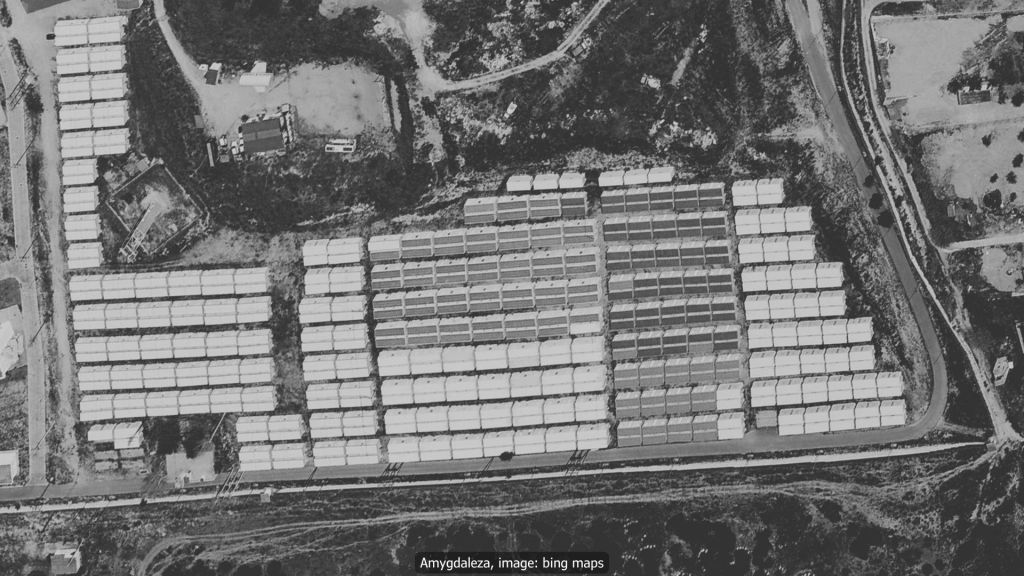
1,791 people detained in mainland pre-removal centres on 31 December 2025, of whom 634 in Amygdaleza, 323 in Corinth and 312 in Fylakio. Main countries include Egypt (627 detainees) and Afghanistan (305 detainees)
204 people detained in police stations as of 31 December 2025
This new Refugee Support Aegean (RSA) note analyses the latest statistics on return, deportation and immigration detention in Greece for 2025, provided by the Greek authorities in reply to parliamentary questions.
For yet another year, the figures reveal a constant, arbitrary practice of imposing deprivation of liberty and deportation, even to countries where removal is neither permitted nor feasible. The data also demonstrate chronic dysfunctions in the review of legality of deportation and detention orders.
Below, we present a selection of key statistics in Greece in 2025, drawn from the full set of figures included in the note.
Return procedures
The Hellenic Police issued a total of 26,527 decisions ordering removal from the Greek territory in 2025. Of those, 11,877 were return decisions, and 14,650 were deportation orders.
As confirmed every year by official figures, the Hellenic Police systematically circumvents EU law through a blanket practice of deportation orders against newly arrived people who seek asylum and thereby have a right to remain on the territory. By way of illustration, the main countries of origin of people facing deportation proceedings in derogation from the Return Directive were by far Afghanistan, Syria, Somalia and Sudan. The majority of nationals of these countries are granted refugee status in Greece.
Throughout the past year, Greece carried out a total of 5,736 returns and deportations. This represents a decrease from 5,865 in 2024 and 6,340 in 2023.
Of the 5,736 returns and deportations conducted in 2025, 2,464 were forced removals, 1,240 were voluntary departures within a set deadline following a return decision, and 2,032 were voluntary returns assisted by the International Organisation for Migration (IOM).
Almost two out of three returns and deportations carried out in 2025 concern nationals of Albania (2,094) and Georgia (1,544) alone. These nationalities are not reflected in the aforementioned statistics on arrivals via Evros and the Eastern and Central Mediterranean. Most returns were forced in the case of Albania, and most were voluntary returns implemented via IOM in the case of Georgia.
Resort to immigration detention
The Hellenic Police issued 25,497 detention orders in 2025.
This year too, pre-removal detention in removal proceedings was imposed systematically and not as a last resort, as required by international, EU and domestic law. In fact, detention is an almost automatic adjunct of deportation orders: 99.2% of deportation decisions were accompanied by a detention order, whereas 66.6% of return decisions were coupled with detention.
The main nationalities of people subject to immigration detention in 2025 were Afghanistan, Egypt, Syria and Sudan.
Pre-removal detention is conditioned upon the existence of a reasonable prospect of removal from Greece, among other requirements. Yet, pre-removal detention was imposed on people from countries such as Afghanistan or Sudan, without any prospect of removal either to their countries of origin or to Türkiye. The Asylum Service maintains extremely high, near-100% recognition rates for these countries.
Judicial review of detention
3,878 objections against detention were lodged in 2025, corresponding to 15.2% of the total number of detention orders issued by the Hellenic Police – excluding RIS “freedom restriction” orders. Accordingly, less than one in five Hellenic Police detention orders were challenged in court. Here too, the aforementioned obstacles to the accessibility of the administrative appeal against return and deportation decisions, coupled with the complete absence of free legal assistance, adversely affect the effectiveness of access to the objections remedy.
The administrative courts granted 43.6% of objections against detention examined on the merits in 2025.
Serious disparities still persist between judicial review of detention in objections and ex officio judicial review of extensions of detention orders based on domestic asylum and return legislation, even though they relate to the very same provisions and are conducted by the same courts.
Extreme discrepancies in the workings of available mechanisms of judicial review of detention are now a systematic phenomenon in Greece. The administrative courts quashed more than two out of five detention orders challenged before them through objections, yet found less than 1% of orders they reviewed ex officio to be unlawful.
We highlight yet again the pressing need for free legal assistance to people subject to immigration detention and for an in-depth evaluation of the manifestly ineffective ex officio review of detention by the courts.
Detention conditions
1,995 people were held in immigration detention at the end of 2025. Of those, 1,791 were detained in six pre-removal detention centres (PRDC) in mainland Greece and 204 were detained in police stations throughout the country. These numbers represent an increase compared to the number of people detained in PRDC and police stations at the end of 2024.
Egypt (627) was the main country of origin of people in detention at the end of 2025, mainly in Amygdaleza (306). The second main country of origin was Afghanistan, whose nationals were predominantly held in Fylakio (243). The top five countries of origin of people in immigration detention at the end of 2025 includes Pakistan and Türkiye.
Data provided in reply to parliamentary questions refer to deployment of Health Units SA (AEMY) personnel in the pre-removal detention centres at the end of 2025 as follows:
These figures show consistent, critical gaps in health care services for people subject to immigration detention in Greece.