
Rule of Law in Greece
The Rule of Law is the cornerstone of democratic societies. It ensures the proper functioning of institutions, the protection of fundamental rights and freedoms, judicial independence and transparent governance. Its defence and strengthening are an immediate priority for Greek civil society, given the ongoing decline of the country's institutions.
Refugee Support Aegean (RSA) consistently highlights the central importance of the Rule of Law in Greece for safeguarding the fundamental rights and freedoms of every individual. Through its research, documentation, legal interventions and publications, RSA makes a systematic effort to strengthen the Rule of Law and to contribute to related debates at Greek and international level.
Rule of Law and refugee rights
We primarily focus on violations concerning asylum and refugee rights, such as:
- the infringement of asylum and refugee rights,
- illegal pushbacks,
- NGO registration challenges in Greece, impacting the registration and operation of NGOs in Greece.
Rule of Law reports on Greece
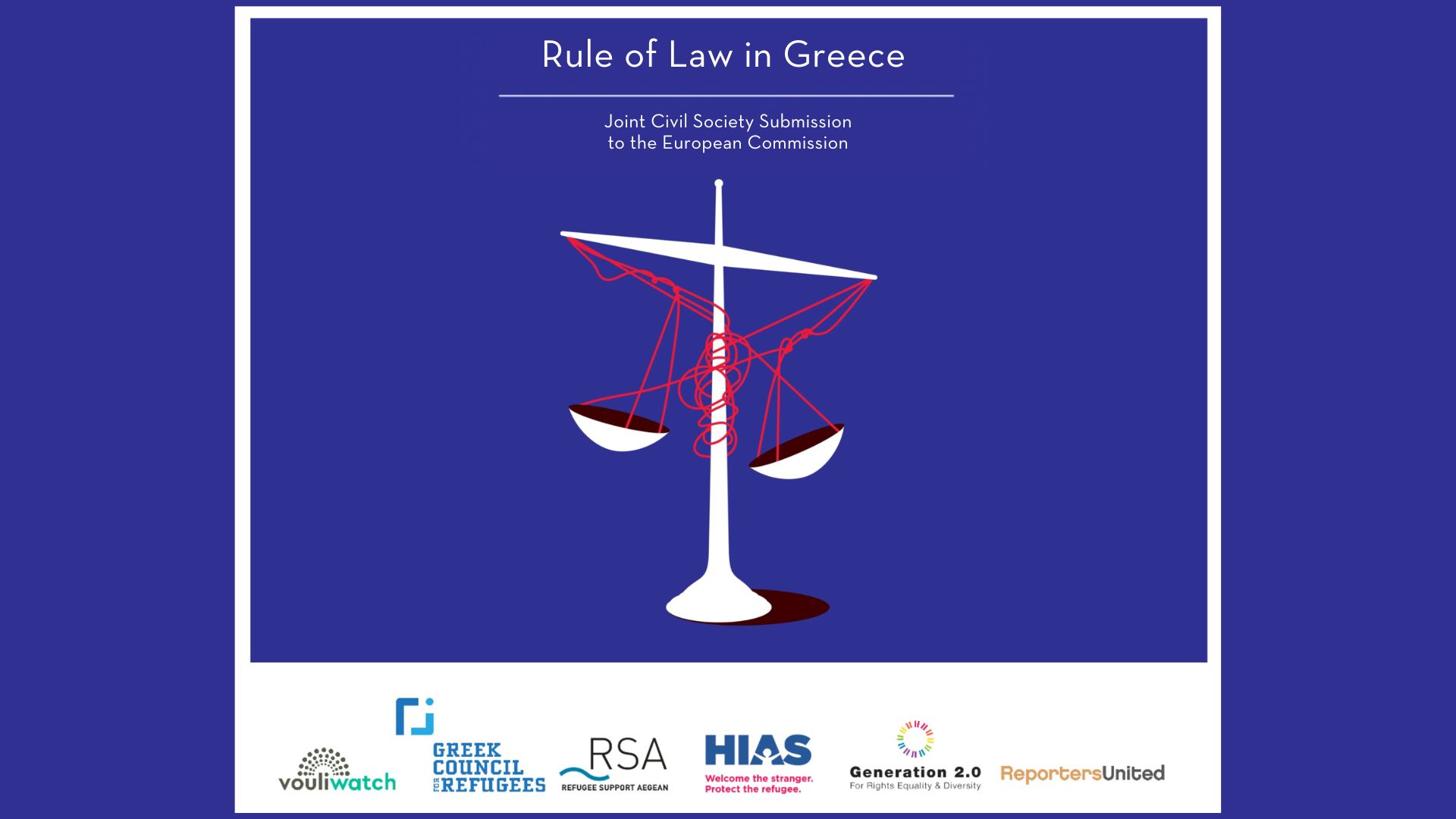
We also closely monitor and contribute to discussions surrounding Rule of law reports in Greece, including the European Commission Rule of Law Report on Greece.
Furthermore, and in collaboration with other civil society organisations, RSA contributes to highlighting other critical aspects of the Rule of Law. These include:
- human rights violations in Greece,
- judicial delays and inefficiencies,
- government transparency and accountability,
- press and media freedom in Greece,
- the role of civil society and legal oversight,
- corruption and anti-corruption measures,
- legislative deficiencies and poor law-making,
- surveillance and privacy issues, including wiretapping.
On this page, we will publish all of RSA's content, analyses, and interventions related to the Rule of Law.