Crete - Gavdos: 8,552 refugee arrivals in the first half of 2026 – The issue of safe accommodation remains unresolved
Arrival statistics for the first half of 2026, the absence of suitable reception facilities, rising xenophobia, deterrence policies in cooperation with Libya, and the criminalisation of refugees
Introduction
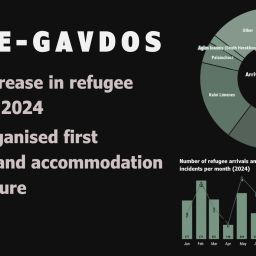
In the first half of 2026, arrivals of refugees and asylum seekers in Crete and Gavdos reached 8,552, continuing the rapid increase recorded over the past two years. In mid-June, the leadership of the Ministry of Migration and Asylum admitted that Crete has become the main gateway into Greece, with around 70% of arrivals now heading there. Despite this admission, improvements to the island’s makeshift infrastructure remain minimal and limited to self-evident interventions, such as the installation of beds at the temporary facility in Agyia, Chania. By the end of June, the creation of an equivalent facility in Heraklion remained completely deadlocked, owing to strong opposition from residents and local stakeholders. Living conditions in the sites hosting new arrivals remain precarious. Xenophobic rhetoric used by the government in recent years has now been adopted by a significant section of local society, while the business community foregrounds the economic damage it expects a facility to cause, disregarding the humanitarian problem that has arisen.
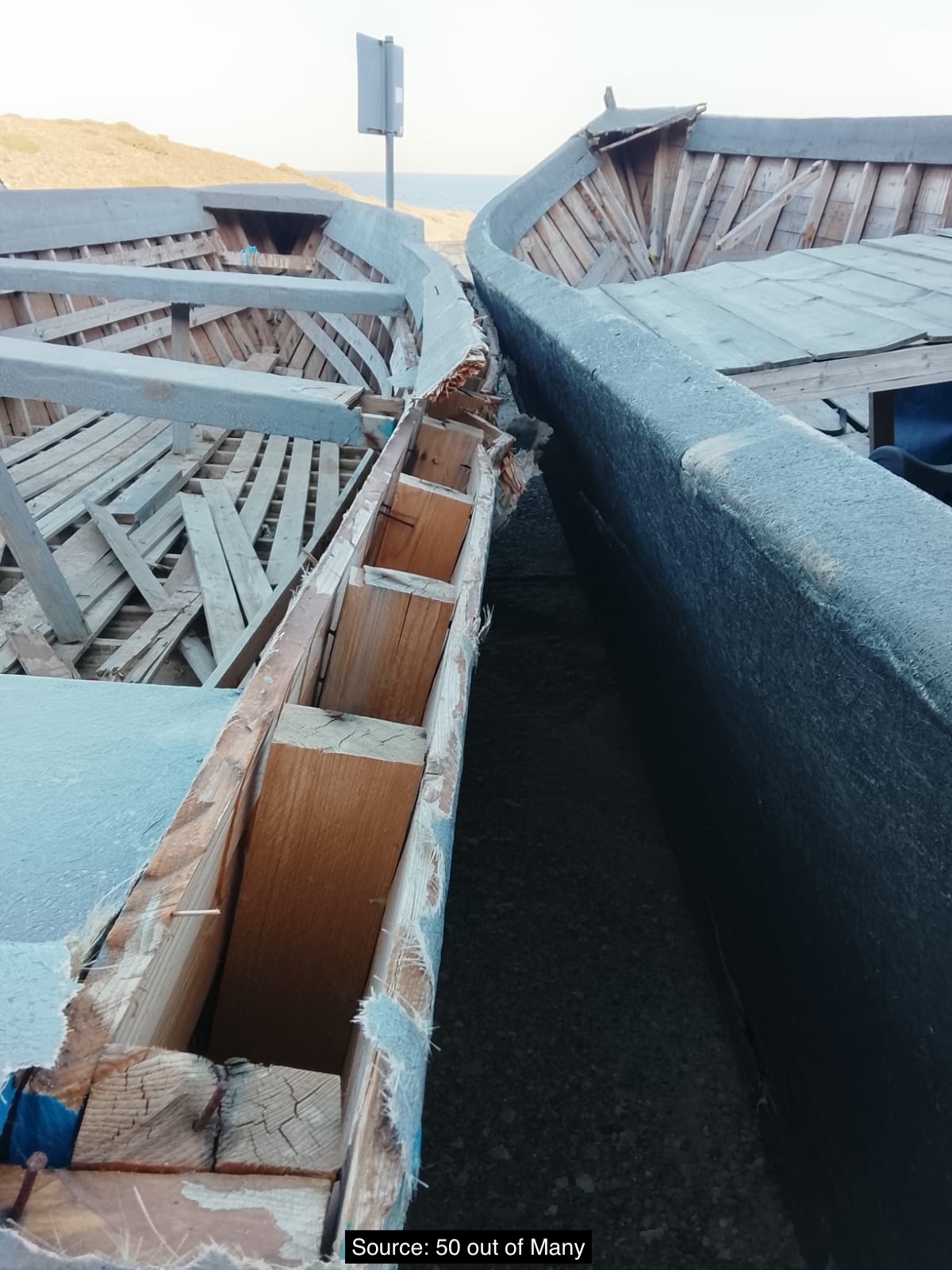
Beyond living conditions, the half-year was also marked by further fatal incidents along the sea route to Crete and Gavdos, by the transfer of hundreds of people to reception facilities in the Eastern Aegean, which triggered strong reactions from local authorities, by intensifying deterrence policies carried out in cooperation with Libyan authorities, and by the criminalisation of refugees, ongoing arrests and prolonged administrative detention under conditions that violate fundamental rights.
Of course, no increase in arrivals could ever justify policies that violate fundamental rights. In this case, moreover, the figure of 8,552 arrivals in Crete over the first half of the year is far from unprecedented: total arrivals in Greece in 2025 stood at 52,180, already down by around 16% on 2024 (62,053). Nevertheless, in July 2025 the Greek government imposed a suspension of the right to asylum (14 July-14 October), specifically for arrivals via North Africa in Crete and Gavdos; a measure that amounted to a flagrant violation of fundamental rules of domestic, European and international law, and which led to around 2,000 people being held in prolonged and arbitrary detention. Policies of this kind serve, above all, to sow moral panic, fuel xenophobia and violate rights, entirely out of step with the actual data, which point to no “crisis” of comparable scale.
Arrival data for the first half of 2026
For this publication, we submitted a request to the Hellenic Coast Guard for arrival data for Crete and Gavdos covering the period from 1 January to 30 June 2026 (total numbers, nationalities, gender and age, including minors).
According to the data provided by the Coast Guard, arrivals for this period totalled
people
incidents.
The majority arrived in Heraklion (3,850), followed by Chania (2,859), Ierapetra (928) and Rethymno (896), while the figures also include one incident in Kalamata (19 people), as it was recorded in the sea area 68 nautical miles south-west of Cape Tainaron, with the crossing having started from the Libyan coast.
Most people came from Bangladesh (3,536), Sudan (3,159), Egypt (1,049), South Sudan (346) and Eritrea (135), among other countries.
The number of minors arriving in Crete and Gavdos during this period is particularly high (780), coming mainly from Egypt (362), Sudan (182), Bangladesh (113) and South Sudan (58), among others.
Among the newly-arrived people are frequently women, infants, and survivors of violence and torture. As Manolis Papadakis, head of the Ierapetra Regional Department of the Hellenic Red Cross, told us in an interview: “There have been newly-arrived people with marks from beatings, specifically from whips and batons, which the Red Cross doctor confirmed. There are also cases of hypothermia in winter, as well as dehydration among both adults and infants, while among the skin conditions recorded are burns, when people on the boats sit close to the fuel tanks.”
The first half of 2026 again saw incidents involving shipwrecks with multiple fatalities, as well as deaths resulting from the dangerous conditions of the journey itself. At the same time, there are missing people being desperately searched for by their families, who cannot be linked to any specific recorded shipwreck. In February 2026, a maritime incident off Kalous Limenes left three people dead and 25 missing. In March, survivors of a shipwreck off Ierapetra reported that twenty-two people had lost their lives due to the hardships of the journey, and that, on the orders of the smugglers, their bodies were thrown into the sea. In June, a man is reported to have died after an incident that occurred at sea, ending up in the water. That same month, a 30-year-old man from Bangladesh, who had been hospitalised at Chania Hospital following a rescue operation, ultimately died. Below a video of a rescue operation:
Absence of state planning and violations of the law on reception and identification
Despite the continuing rise in arrivals in Crete, the state has still, two years on, failed to establish organised and adequate reception and accommodation facilities. The creation of such facilities continues to be discussed and postponed, with repeated commitments from the leadership of the Ministry of Migration and Asylum that have not been implemented, and without the necessary social consensus.
This half-year in Chania, the former exhibition centre in Agyia was converted into a temporary facility able to operate as a Regional Reception and Identification Service. The property lease agreement was signed on 16 March 2026. The site’s legal status, however, remained unclear: in the tender for the construction of a NATO-style fence around the site (including razor wire), the Ministry initially referred to it as a “facility”, before correcting this a few days later, in an official amendment, to “temporary facility”. Chania Deputy Mayor Eleni Zervoudaki stressed that Agyia remains a temporary accommodation site and that the works underway in no way alter this temporary character. Chania Deputy Regional Governor Nikos Kalogeris, meanwhile, stated in early February that a request had been made for “a solution to unblock and release the property, for which the studies have already been approved, which is ready to be included for funding, and which was our only venue for exhibitions in Chania, to showcase local products.”
By the end of June, the Reception and Identification Service responsible for the temporary facility in Agyia had still not been fully staffed, meaning that the prompt identification of vulnerable people was not guaranteed. “We are still at a transitional stage, as administrative staff from the Ministry of Migration and Asylum have arrived, but with limited responsibilities. Initial registration is carried out by Coast Guard personnel. The Ministry has provided interpreters for three languages,” Chania Deputy Mayor for Social Policy Eleni Zervoudaki told us. The Minister of Migration and Asylum, Thanos Plevris, during a visit to Agyia in mid-June, stated that the temporary facility was operating as a model, and that registration and the separation of newly-arrived people was proceeding normally: those who do not meet the conditions for asylum are transferred to closed facilities, while those with a refugee profile are placed in the asylum procedure.
In Heraklion, the equivalent effort remains entirely deadlocked, despite the Ministry’s related commitments. To date, no site has been found for the creation of a temporary facility, as every proposal has met with strong opposition from residents and business owners, chiefly from the tourism sector. The Ministry of Migration and Asylum has recently announced that it will convert the Skouloudis warehouses in Athanatoi into a temporary accommodation site, and is pressing ahead with this choice despite residents’ objections and a site inspection by the Urban Planning Authority that identified serious issues. This will be a closed-type facility under continuous guard, where residents will have no access to outdoor space, and will effectively be held in detention for the duration of their stay, theoretically lasting one to three days. Meanwhile, on 16 June, an application for an interim order filed by the Heraklion Port Authority against the Heraklion Harbour Master’s Office, seeking the immediate evacuation of the old ‘Psygeio’ (Fridge), was rejected by consent; the application for interim measures will be heard on 24 July, while the Ministry maintains that works at the Skouloudis site will have been completed by then. In a resolution passed on 23 March 2026, Heraklion Municipal Council stated that local society and local government cannot simply be informed of decisions that have already been taken, but must have a substantive say in the choice of site.
The authorities, therefore, continue to fail to implement the explicit provisions of the law, which require that newly-arrived people be brought into reception and identification procedures immediately upon arrival, under the responsibility of police or coast guard authorities.
Undignified conditions at unsuitable temporary accommodation sites
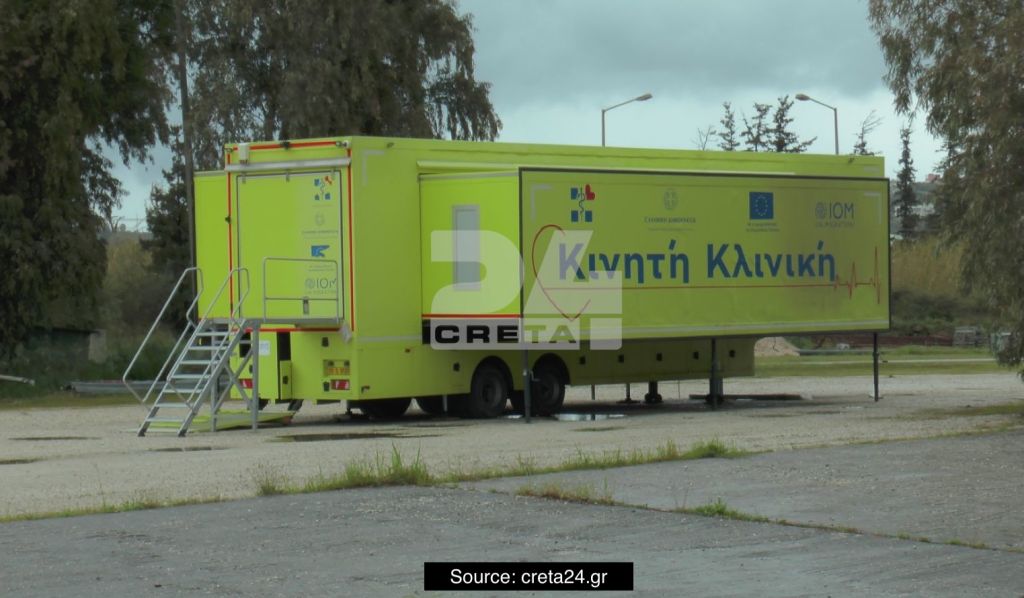
In Chania, at the temporary accommodation site in the former exhibition centre in Agyia, works were carried out by the Ministry of Migration and Asylum at the end of March. Around five hundred and fifty bunks and mattresses were delivered, along with a mobile clinic and prefabricated units to house, among other things, administrative services of the Ministries of Migration and Asylum and Shipping. Plans are also underway to partition the site, install showers with hot water, and provide access to outdoor space. By the end of June, 163 people were staying at Agyia, with beds available for around 350. The mobile clinic is operating, and the Red Cross is called upon whenever needed. Chania Municipality provides food, footwear, clothing and toilets, and tries to meet any other needs that arise, according to Deputy Mayor for Social Policy Eleni Zervoudaki. According to the same source, people with a low likelihood of qualifying as refugees are transferred to facilities on the islands of the Eastern Aegean.
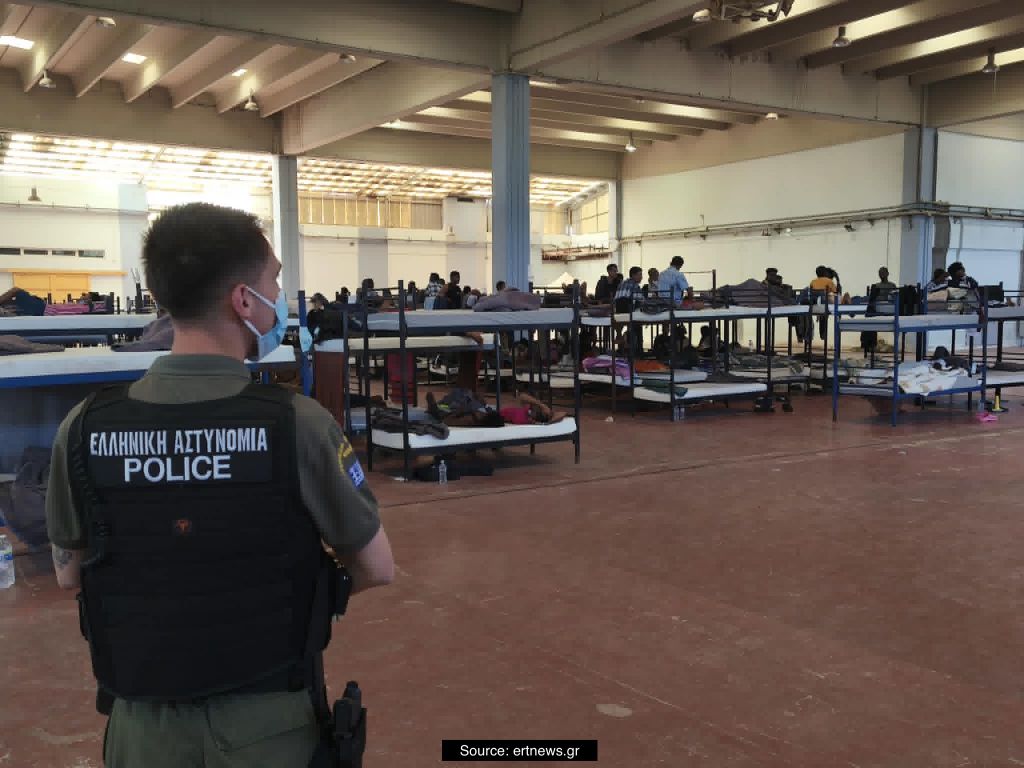
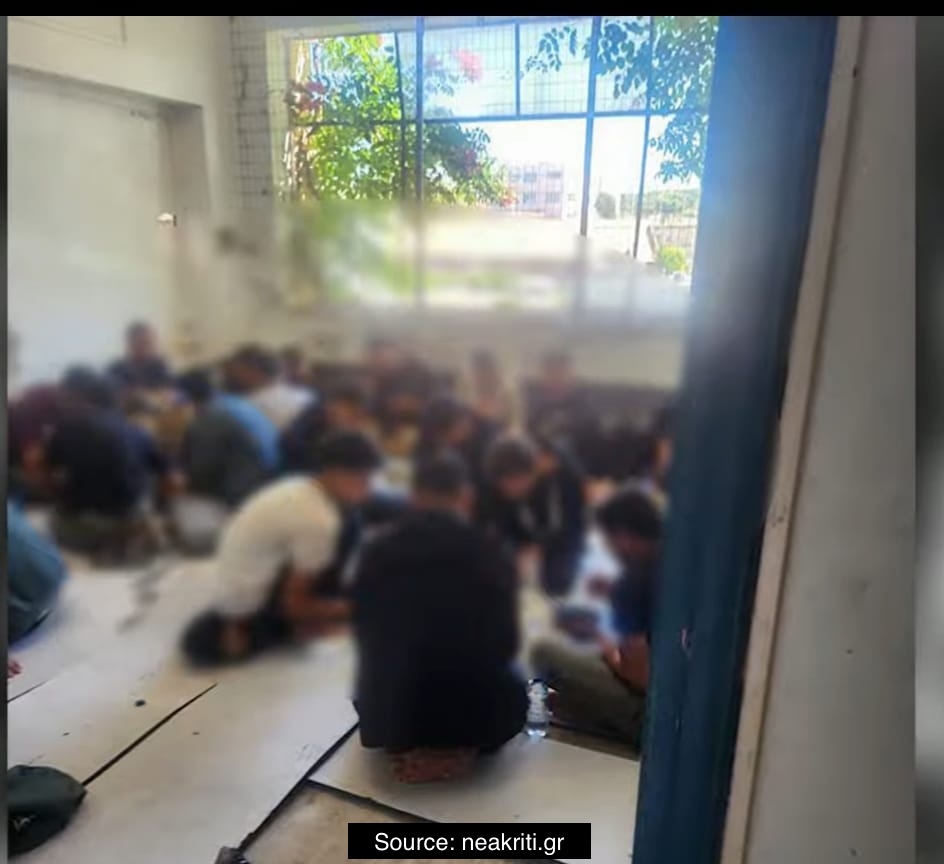
In Rethymno, newly-arrived people who reached the southern part of the prefecture this half-year were transferred to the building of the old Harbour Master’s Office in the city of Rethymno. According to Deputy Mayor for Climate Change and Civil Protection Giorgos Skordilis, whom we interviewed, arrivals in the prefecture from the start of the year to early June rose by 100% compared with the same period the previous year. The site has a capacity of 90-120 people. At the old Harbour Master’s Office there is a toilet, with additional chemical toilets brought in when needed, but no shower. There are no beds, only mattresses and blankets. Food is covered by the Municipalities of Rethymno and Agios Vasileios, while Rethymno Municipality also provides personal hygiene items. Newly-arrived people usually stay there for 2-3 days before being transferred off Crete. The Red Cross provides first aid, clothing and footwear, while interpretation is handled by Rethymno Municipality’s social services department.
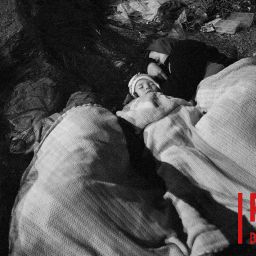
In Heraklion, despite being entirely unsuitable, the old ‘Psygeio’ (Fridge) at the port continues to operate as a temporary accommodation site, with capacity for 70-80 people. Newly-arrived people, among them women, children and unaccompanied minors, sleep on the floor, on cardboard boxes, blankets and thin mattresses. In early June, the number of occupants exceeded 450, meaning that dozens of people were forced to sleep outside the building; local media also reported a risk of falling plaster. In one striking instance in early June, 43 newly-arrived people who had been brought to the port of Heraklion were forced to remain inside the bus that had transported them there, owing to a lack of available space, and were ultimately transferred to Ierapetra. To meet the resulting needs, additional chemical toilets were simply added at the entrance to the site; there is no shower, not even a single tap, resulting in even worse hygiene conditions. According to accounts, the site has no ventilation and the atmosphere is stifling. Barefoot refugees have been forced to pour water from plastic bottles onto the asphalt to withstand the burns and manage to stand while waiting their turn outside the old ‘Psygeio’. Heraklion Municipality provides medicine and clothing on a voluntary basis; food and other responsibilities have been taken on by the Coast Guard. The Health Centre provides medical services, while the Red Cross covers first aid and helps distribute food.
Video: Barefoot refugees have been forced to pour water from plastic bottles onto the asphalt to withstand the burns
External content from Instagram
By loading this video, you accept Instagram's privacy policy and allow the use of tracking cookies.
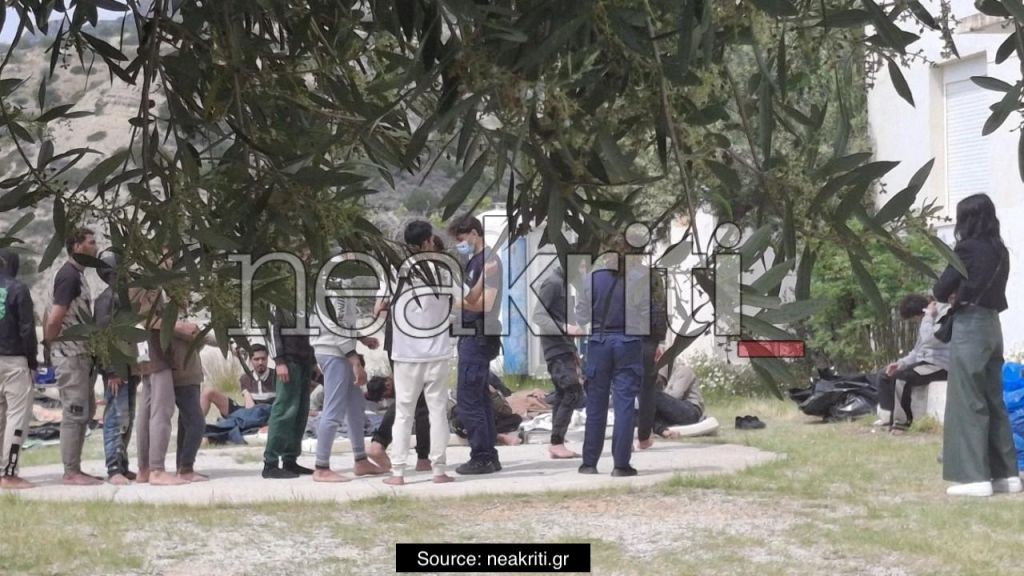
In Ierapetra, newly-arrived people this half-year were transferred to the old school building in Kalogeri. The site has a toilet, with additional chemical toilets brought in when needed. Ierapetra Municipality covers food, the provision of hygiene items, and the cost of transport to Heraklion. The Red Cross, beyond first aid, covers clothing and footwear needs with the help of residents and local groups, and provides assistance in cases requiring medical assessment or transfer to hospital. The NGOs Crete for Life and A Drop in the Ocean/Stagona also contribute supplies whenever they can.
Reactions from residents, associations and business circles
The lack of substantive and timely information for local authorities and the local society, the lack of transparency, and xenophobic public discourse are intensifying reactions and leading to deadlock at every level. In Chania, staff working in Regional Unit services co-located at the Agyia complex expressed, through their association, strong objections to the works carried out at the former exhibition centre last March. Among other things, they stated that they had received no meaningful information about the plans being pursued for the premises, and that staff at the service remain entirely “in the dark” as to the impact such a decision will have on their working conditions and safety.
In Heraklion, reactions from residents and business owners have been intense: there have been protests, road blockades, and interventions by residents at municipal and regional council meetings. “They give no information, either to the Municipality or to residents, and that is why there is this tension; the specifications have not been made public, so that residents and stakeholders know what to propose,” Deputy Mayor for Social Welfare Stiliani Archontaki told us. In late June, the Association of Venizeleio Hospital Employees expressed its opposition to the creation of a closed facility for newly-arrived people in Crete and to policies confining refugees, noting, among other things, that they were witnessing “an organised attempt to turn justified social discontent into fear, racism and bigotry.”
Charis K. Lagoudakis, a member of the Board of the Heraklion Bar Association, told us in our communication with him: “The refugee and migration issue continues, in 2026 too, to be one of the most significant challenges facing Crete, highlighting long-standing gaps in state planning for the reception and management of increased arrivals. Ensuring dignified temporary accommodation, access to healthcare services and to international protection procedures, and full compliance with the obligations arising from the Constitution and from EU and international law, are all necessary conditions for effective, human-centred management of the issue. Addressing increased refugee and migration flows requires coordinated action by the State and the competent authorities, with respect for human dignity and for the fundamental principles of the rule of law, while public debate must be conducted with sobriety, substantiation and responsibility, far removed from xenophobic and racist views that do not contribute to a genuine response to the phenomenon.”
Rising xenophobia
Xenophobic sentiment in Crete intensified markedly this half-year, both through mobilisation on social media and incidents of violence, and through the public rhetoric of political figures.
In mid-June, identical posters began circulating on social media calling for a demonstration on 20 June in Chania, Rethymno and Heraklion, under the slogan “Cretans, wake up! Crete cannot take any more!”. In Chania, the demonstration ultimately did not take place, while in Heraklion only a handful of people responded to the call; by contrast, anti-fascist rallies were held in Heraklion a day earlier and in Chania on the same day. The day before the planned demonstration, the offices of SYRIZA – Progressive Alliance and of New Left in Chania were vandalised, and nationalist material targeting refugees was distributed, while xenophobic slogans were found in various parts of the city, attributed to a newly emerged group calling itself “Defend Chania”, which signs its material with the image of a machine gun.
In contrast to this climate, the Heraklion Bar Association, in a related statement, stressed the need for public debate to be conducted with sobriety and free of xenophobic and racist views.
Over the same period, the xenophobic rhetoric of political figures also escalated.
Transfers to Eastern Aegean islands and reactions from local authorities
In recent months, large numbers of newly-arrived people have been transferred from Crete to the Dodecanese. In mid-May, around 450 people were transferred from Heraklion to Kos, escorted by police and coast guard officers. Further transfers to Kos and Leros followed, provoking discontent among stakeholders and residents in Kos.
In early June, around 300 refugees, including young children and unaccompanied minors, were transferred from Crete to the Closed Facility on Samos by Coast Guard vessel. This transfer triggered strong reactions from local authorities. West Samos Mayor Themistoklis Papatheofanous, in a letter to the Minister of Migration and Asylum using xenophobic language, called for “the proposals of the competent Services on managing the migrants invading Crete to be reconsidered, concealing as they do the shortcomings in management, the lack of action and the poor organisation of the distribution of refugee accommodation there.” The Minister of Migration and Asylum has announced that, through a tender to select a contracted operator, a private vessel with a capacity of up to 500 passengers will be chartered to transfer refugees from Chania to mainland Greece 2-3 times a week; an equivalent vessel is planned for Heraklion.
Deterrence and cooperation with the eastern Libyan regime
At the end of April, Minister of Migration and Asylum Thanos Plevris stated that, owing to “good conditions”, far more flows had been deterred than had actually arrived during that period. At the end of May, he stated that “around 500,000 migrants are in Libya intending to cross into Europe”, noting that in the first fortnight of the month alone around 1,200 arrivals and 530 cases of deterrence had been recorded, without clarifying how these cases of deterrence were carried out. Around the same time, he stated that, should arrivals increase, measures even harsher than the simple suspension of asylum would be introduced.
In early June, Thanos Plevris stated: “Unlike the Aegean, in the Libyan Sea, once a boat is in open waters, deterrence is no longer possible. It has to happen at the point of departure, carried out by the Libyan authorities.”
This strategy is also reflected operationally. According to Giorgos Sfakianakis, president of the Union of Coast Guard Personnel of Eastern Crete, a new strategy for migration in Crete is being applied, involving deterrence before departure, within a framework of closer cooperation between the Greek government and the Libyan and Egyptian authorities. According to the same source, the Libyan Coast Guard has already been reinforced with two vessels, and a liaison officer from the Hellenic Coast Guard is now stationed at the Greek Consulate [in Benghazi]. According to media reports, the area is additionally covered by assets of the European Border and Coast Guard Agency (Frontex), comprising three aircraft and one unmanned aerial vehicle (UAV), with the arrival of a further aircraft expected imminently, ensuring 24-hour operational coverage in combination with national and European assets.
Criminalisation of refugees and detention in unacceptable conditions
Arrests on charges of smuggling continue unabated, including even unaccompanied minors; in one case, a minor barely in his teens: in early June, a 13-year-old Sudanese national was arrested by coast guard authorities on Gavdos, following the arrival of 42 people found aboard a boat off the island. According to data provided by the Hellenic Coast Guard to Refugee Support Aegean (RSA), 221 arrests were made in the first half of 2026; a particularly high figure, with the majority of those arrested coming from Sudan (45) and South Sudan (151), countries torn apart by civil war.
At the same time, an unknown number of people remain in administrative detention at police holding cells in Heraklion, in some cases for months, in violation of every basic human right. “People without papers remain in this form of closed detention, as do people who have been acquitted of a criminal charge but are held in administrative detention; they don’t even separate criminal detainees from administrative ones,” a member of Thalassa of Solidarity told us. On 18 June, the Heraklion Bar Association issued a statement highlighting the unacceptable conditions at the Heraklion holding cells and stressing the need for an on-site inspection.
At the Chania holding cells in March, a 30-year-old Egyptian man attempted to take his own life after being returned to detention pending the enforcement of his deportation, having believed he was about to be released. According to the Chania Social Centre – Migrants’ Centre, the public prosecutor stated that there was no possibility of legal intervention to secure his release, as this would only be possible once his deportation had been carried out.
Without a stable and organised solution for reception and accommodation, the situation in Crete and Gavdos remains, to a large extent, precarious and dangerous, owing to the conditions on the island described in this text (lack of basic infrastructure, xenophobic incidents, arbitrary detention, among others), while the living conditions of newly-arrived people remain undignified and in violation of their fundamental rights. RSA (Refugee Support Aegean) once again calls on the competent authorities to guarantee:
- The rescue of people in danger at Greece’s maritime borders and within the Greek Search and Rescue (SAR) region, through the provision of adequate means.
- The implementation of existing legislation on reception and identification procedures under dignified conditions.
- Adequate healthcare and interpretation services.
- An end to the criminalisation of refugees and to arbitrary, prolonged administrative detention.