
International Women’s Day 2026
“But still, like dust, I’ll rise”
International Women’s Day 2026
“But still, like dust, I’ll rise”
The stories of two recognised refugee women returned to Greece from other EU countries
Two women recognised as refugees in Greece were forcibly returned from other EU countries, only to find themselves homeless in Athens. On the occasion of International Women’s Day, they share their experiences, feelings and reflections.
International Women’s Day, celebrated on 8 March, is a global call to action for gender equality and empowerment. It is a day to amplify women’s voices and lived realities.
In 2025, 13,629 women applied for asylum in Greece (22% of all asylum applications). No official statistics are publicly available on LGBTQI+ persons. Refugee Support Aegean (RSA) shares the voices of two women from different backgrounds: a trans woman and parent, and a single mother of four. Both have faced severe hardships in Europe but yet stand strong today. Both are trying to move forward, even when it is unclear where their path will lead.
We asked them what it means to them to be a woman, what gives them strength, and which moment in their lives marked and changed them. As recognised refugees in Greece who were returned here, they reflect on what it means to be deported back, to live without valid documents, without work and without a home. They describe the specific challenges they face, and the resilience that keeps them going.
Here are their stories
Note: The quoted phrase in the title is drawn from Maya Angelou’s poem “Still I rise”, (1978), a powerful celebration of inner strength and the ability to overcome oppression.
“My heartfelt wish for everyone, whether male or female or other, is to have a safe place to live”
About Mariella*
Mariella* (44), from Iran, is a trans woman and a parent who was deported almost a year ago from Germany due to her Greek refugee status. She had to leave her underage daughter in Iran with her mother. When she was forcibly returned to Athens, her Greek residence permit had already expired. She immediately applied for renewal, but almost a year later she is still waiting. Without valid documents, she has been unable to access basic rights or formal work to support herself and her family back in Iran.
The day I was deported from Germany, I had no money and no place to go. I went to a police station in central Athens and asked for help. I said, ‘What should I do now as a homeless trans woman standing in front of you?’ They only told me to renew my ID. Nothing else.
I travelled to Patras to look for an old friend, the only person I knew, hoping he could give me shelter. I couldn’t find him and returned to Athens with no money left. I went to an informal hostel, a “mosaferkhana”, where many people sleep in shared rooms for 10 euros a night. That night, three or four men tried to rape me. I screamed and the owner knocked on the door and helped me. In the morning I left because I wasn’t safe. After that, I had to sleep outside. It is very difficult for a woman to sleep rough in Athens, however there are many women and trans women sleeping on the streets.
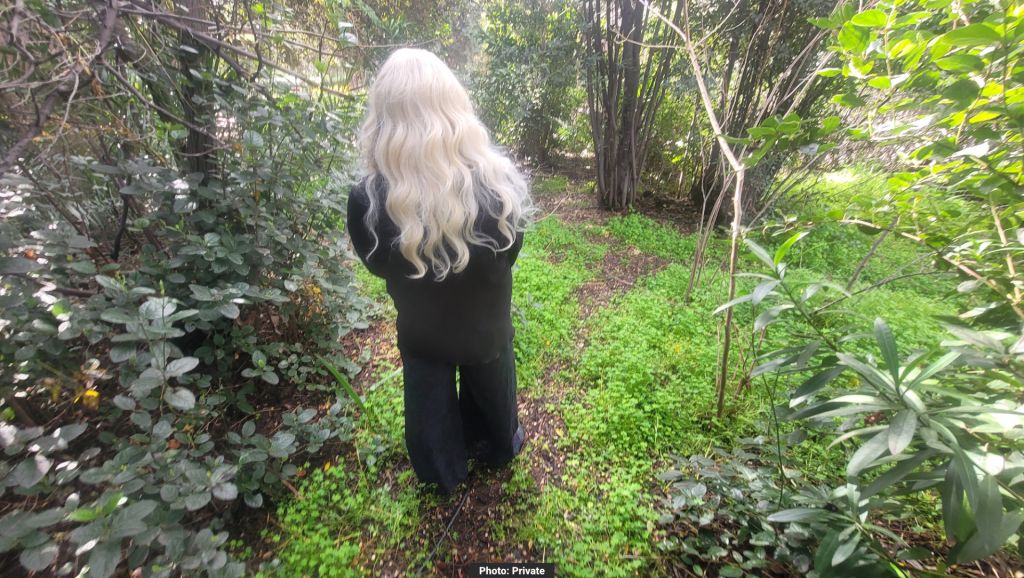
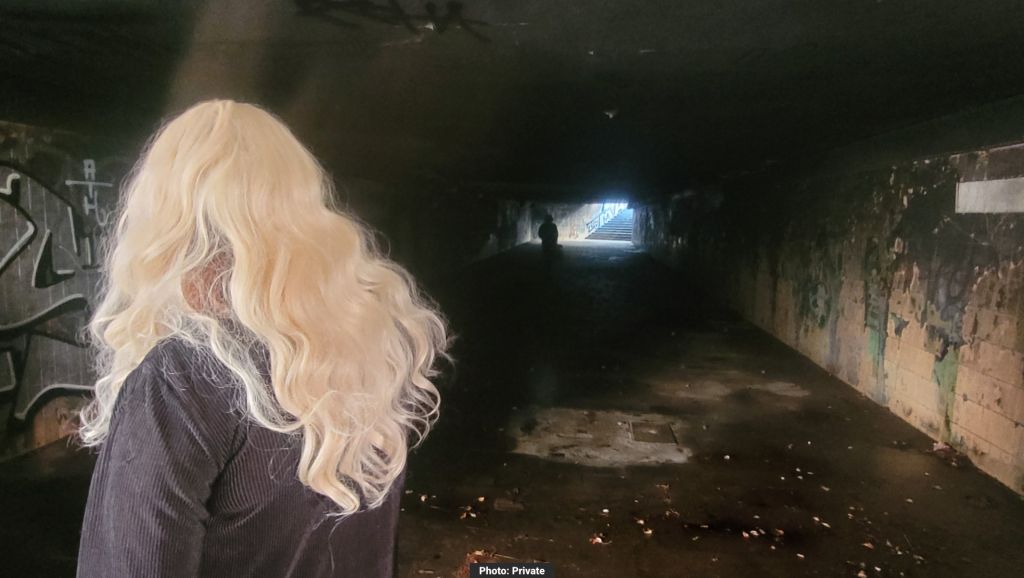
For some time, I slept in a park in central Athens. One night, some men attacked me and tried to steal my documents and phone. I shouted and a woman came running; they escaped. After that, I slept for two weeks in a pedestrian tunnel under a main street, with no lights. I would wake up at every sound.
Before I left Greece for Germany, my life here was already very difficult because of the lack of work and housing. But at that time no one harassed me because of my gender. Back then, I could not be myself yet, and I was living as a man in appearance. Now that I am a woman, many people look at me in a way that makes me feel they want to exploit me. I feel that many people in Greece do not understand what it means to be a trans woman. I often feel discriminated against. Some people from my own community told me to return to my masculine appearance and then they would help me. But I need support as a trans woman. I was finally able to be myself and express myself as a woman. I cannot just stop being myself.
Since I was returned to Greece, I have asked organisations for help and sent emails to employers, but for eleven months I have not found a job. When I first lived here, I survived by collecting waste and selling it to recycling companies. I walked many kilometres every day with a cart. But now, as a trans woman, I cannot work in that sector or in agricultural labour, where I would face harassment. Work is necessary and I urgently need money, but I cannot change my identity for work.
Without a valid residence permit, I cannot obtain a tax number, open a bank account or work formally. I cannot register as unemployed or access social benefits such as a free transport card, social supermarkets or pharmacies.
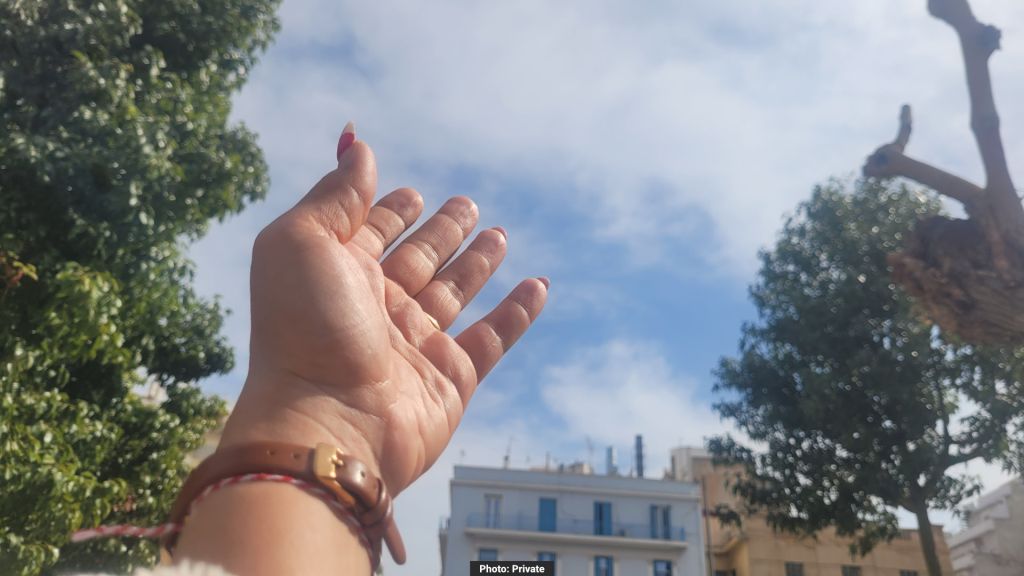
In Greece, you can see beauty, like the Acropolis, the sun, the sea, but you can also be hungry and homeless. I once took a photo of two trees standing next to each other in a park. One was green and alive, the other completely dry. It should not have been dry in spring, when everything was blooming. It is the same for people who are deported back here. You can become like that dry tree.

Greece recognised me as a refugee and gave me protection. Shouldn’t there be at least minimal support? If I lose the temporary place where I am staying now, without documents, work or benefits, will I face homelessness and abuse again?
Despite everything, I find strength in my inner feeling. Knowing that I am a woman gives me strength. This is who I am, and I don’t care what anyone says about me. Being able to live as myself gives me inner peace. It means freedom. I still remember the first day I dressed as myself. I felt a deep calm. That was the greatest change in my life. It helps me continue.

My heartfelt wish for everyone, whether male or female or other, is to have a safe place to live. My personal wish is to have a shelter of my own and to reunite with my daughter. It has been eight or nine years since I last saw her. I miss her.
“No one gave me my rights in Europe! I gave myself my rights here in Europe!”
About Nilab*
Nilab* (39), from Afghanistan, is a single mother of four with a severe disability who was deported at the end of January 2026 from Germany, despite many years of residency there and her children being fully integrated in school and daily life there. Her Greek documents have long expired. No housing or state support was accessible to her upon return. The family is currently supported humanitarianly only by German neighbours and friends who are advocating for their return to Germany, while their legal support is provided by RSA.
As a woman, what I remember every day is the feeling of responsibility. My children. Breakfast, lunch, dinner. What should I cook? What will they eat when they wake up? My mind is always there.
Carrying children, raising them, staying awake for them, thinking about their future, the pain we endured for them; this makes you strong.
My life changed because of my hijab. In the beginning in Germany I was still wearing it. At first, I felt uncomfortable because many people were staring at me. Then I also realised I was not comfortable. It took me about a year to take it off because I had worn it for more than thirty years. But the day I removed it, I did it for myself. I felt free.
I am not saying the hijab is good or bad. What matters is how each person feels, and their choice. No one should force a woman to wear something or to remove it. The decision must be her own.
The biggest difficulty for a woman forced into migration is loneliness. When no one understands your words, your struggles, your fears, you feel alone. Who can understand how I feel as a single mother without papers in an unknown country without understanding the language or the rules?
No one gave me my rights in Europe. I gave myself my rights here in Europe. I gave myself worth. For years in Germany I lived with a ‘Duldung’ [legal state of tolerance where one can be deported any time], always at risk of deportation. I had to fight for everything alone; for documents, for my divorce, for my children. I learned that if I did not stand for myself, no one would.
When they deported us from Germany one month ago, it was a shock.
They did not give me time to defend myself.
We went to an appointment thinking it was about documents. Instead, the police came. My eldest daughter was given fifteen minutes to pack.
Fifteen minutes to leave our new life behind once more. The children had school, football training, plans for the next day. We had just bought groceries and filled the fridge. I hadn’t even washed the dishes, thinking I would be back in a few hours and do them then. I was planning my birthday with my friends.
Suddenly, everything stopped. Our home was left abandoned in the middle of ordinary life.
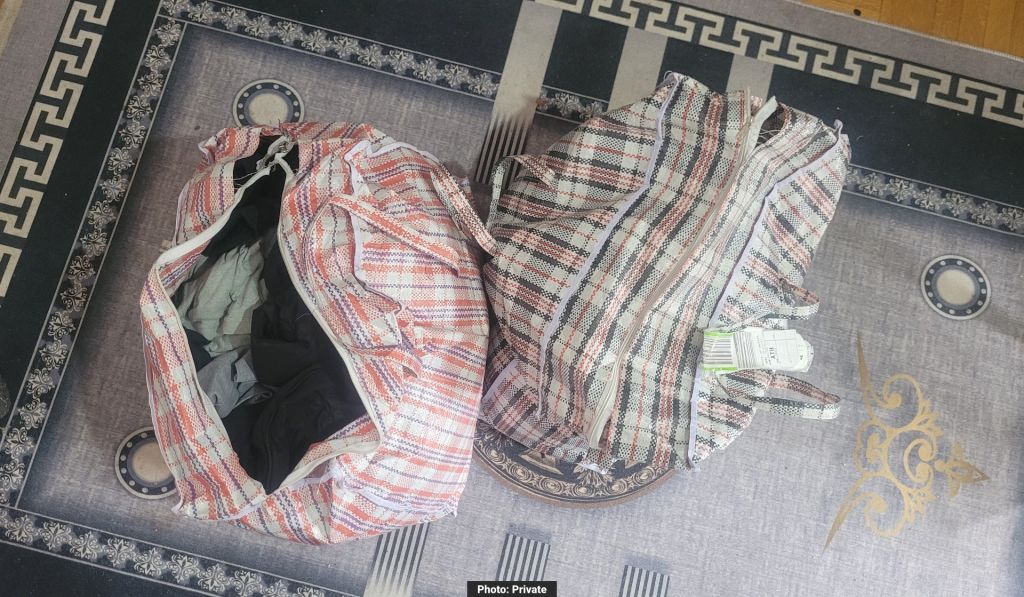
This deportation made me stronger, but my heart has broken because of my children. I can survive many things. They are just children. They became more fragile after all that. They say we will never go back to our school.
All women in the world, even those who know how to defend their rights, I’m sure they have found themselves in situations where they faced sexism. They all realise at some point that being a woman hurts, despite differences between us. Maybe that is why women become strong. There is a pain women carry; in their bodies, in their responsibilities, in the way society looks at them. In the way men look at us. We face sexism and judgment. Because of that, I learned to protect myself, to keep distance. But what matters most is how you see yourself. How much you respect yourself. No one should make you feel small.
I do not have big wishes. When a friend asked me recently what I wish for, I said health for everyone. I prefer to try to achieve things myself rather than only wishing for them.
* Names of persons cited in this text have been changed to protect safety and privacy.