This year’s Human Rights Day (10 December), Refugee Support Aegean (RSA) presents an updated overview of the conditions prevailing in refugee camps across mainland Greece. Our findings highlight systematic gaps in shelter and living conditions, insufficient to non-existent access to essential services such as interpretation, transportation and social support for vulnerable individuals, an ongoing failure on the part of the state to provide the cash assistance required by law, and a lack of basic necessities. These shortcomings strip thousands of people of dignified living conditions.
“For everything you need to find a solution on your own – if you can. However, without money you can do nothing, and you have nothing. Only sleepless nights filled with worry.”
Laila*,
44, from Syria, single parent of three children, residing in the “old camp” of Malakasa
According to government policy, camps isolated from local communities are the sole form of accommodation offered to people seeking asylum in Greece. Documenting the living conditions in these camps, both in mainland Greece and on the Eastern Aegean islands, is a core area of Refugee Support Aegean (RSA) work.
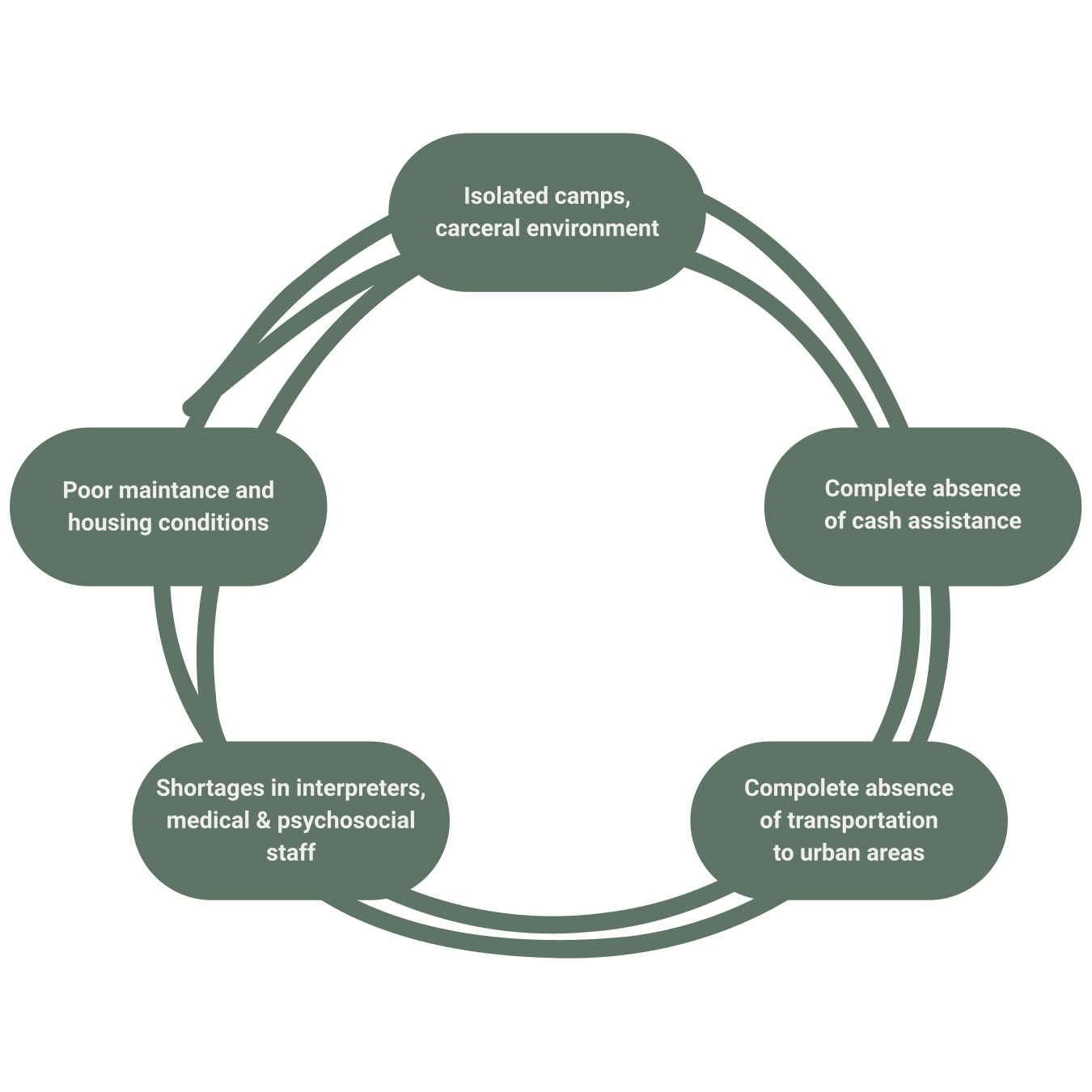
This camp system is still underpinned by a widespread lack of access to adequate reception conditions to asylum seekers, owed to the cumulative impact of the state’s failure to provide monthly financial allowances (cash assistance), poor housing conditions, insufficient interpretation and medical and psychosocial services, and an absence of means of connection between isolated camps and urban services. These factors shape the image of the camps as a “closed system” where people seeking – and in most cases entitled to and obtaining – international protection in Greece are deprived of dignified living conditions and of the necessary means of inclusion in the community.
“A key focus for Greece is ensuring adequate access to reception conditions, addressing both the quantity and quality of services provided. This involves resolving ongoing issues, including improving interpretation services, transportation, cash assistance, and fixing damages in reception facilities.”
European Commission, 26 September 20241
Housing conditions
The latest official data from the Ministry of Migration and Asylum refer to 22,427 people residing in the camps managed by the Reception and Identification Service (RIS) across Greece. The camps had a total actual capacity of 33,423 accommodation places at the end of the first half of 2025.
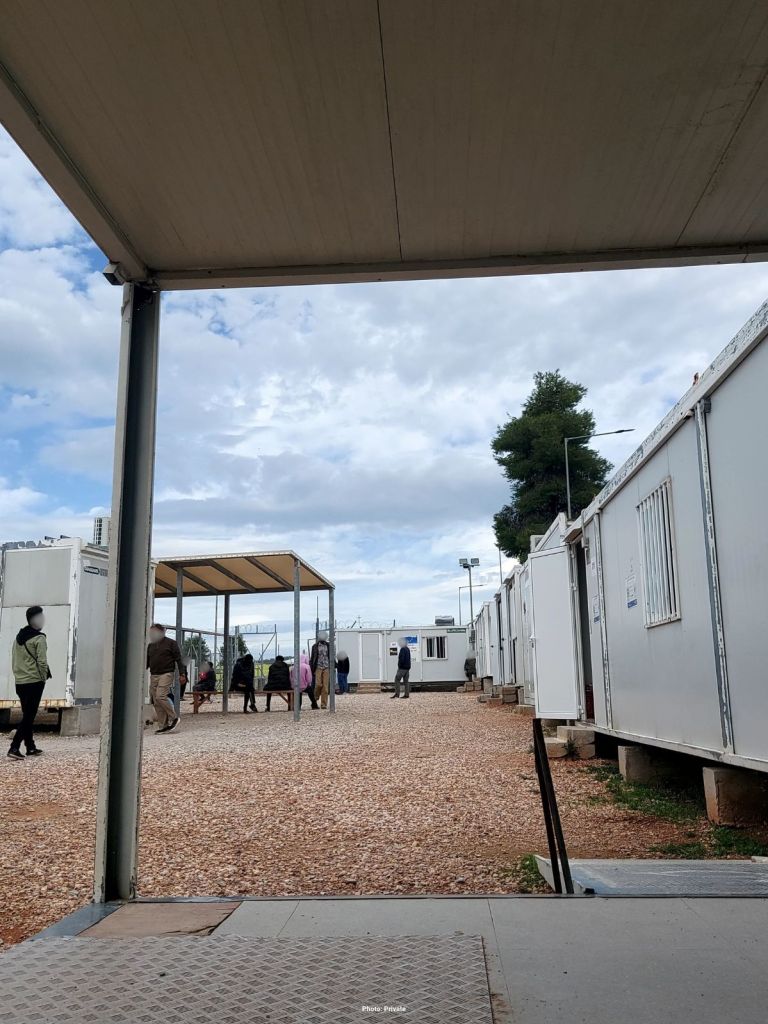
However, housing conditions in the camps remain inadequate due to persistent maintenance issues. In the Reception and Identification Centre (RIC) of Malakasa, north of Athens, people are accommodated in containers infested by insects such as cockroaches, without lighting or running water. They sleep on beds without sheets or blankets, as these items are not provided. People who stayed in the RIC for two months before being transferred to another RIS facility reported never having had access to hot water.
“I stayed there for two months. Things were harder there. We stayed in a container with eight people, four in each room. The bathroom and kitchen didn’t work. Only the air conditioning worked. They gave us clothes only when we arrived: a shirt, a pair of pants, and a jacket that was too small, so I gave it to someone else. They didn’t give us any underwear. Soap and shampoo were given only once when we arrived. We didn’t have toilet paper. The container we stayed in had no hot water, no sheets or blankets, and there were cockroaches and insects.”
Nasir*,
who was registered in RIC Malakasa
“I stayed there for two months. Things were harder there. We stayed in a container with eight people, four in each room. The bathroom and kitchen didn’t work. Only the air conditioning worked. They gave us clothes only when we arrived: a shirt, a pair of pants, and a jacket that was too small, so I gave it to someone else. They didn’t give us any underwear. Soap and shampoo were given only once when we arrived. We didn’t have toilet paper. The container we stayed in had no hot water, no sheets or blankets, and there were cockroaches and insects.”
Nasir*,
who was registered in RIC Malakasa
Malakasa Camp, 2025
Critical conditions are reported in other mainland camps as well:
“When we arrived at the camp, we had nothing. During the first month, we shared a container with another family of four. We had no blankets, pillows, towels, soap, nothing. Only cockroaches everywhere. I still haven’t managed to get rid of them… We had to find everything we needed ourselves, asking other refugees leaving the camp to give us what they couldn’t take with them, or seeking help from small humanitarian organizations outside the camp. Also, if something breaks inside the container – like the fridge or air conditioning/heating – you have to wait months for it to be fixed or replaced.”
Laila*,
residing in the “old Malakasa camp” located near the RIC.
Ritsona Camp, 2025
“There are cockroaches everywhere running up and down the walls of our room, so we cannot keep food for more than a day. They gave us shampoo once, but we haven’t received any hygiene items or cleaning products. The shared toilets are dirty. Sometimes there is no water in the bathrooms. Many women get urinary tract infections. Many people also have skin problems. We have nothing except a room with three beds and a fridge. Now that winter is coming and it’s cold, we have no clothes, so we mostly stay inside. I told the camp I needed clothes for my child. Because she is sick and weak, she gets sick very quickly. But they told me they don’t have clothes in her size.”
Feruza*,
a refugee residing in the Oinofyta camp
Ritsona Camp, 2025
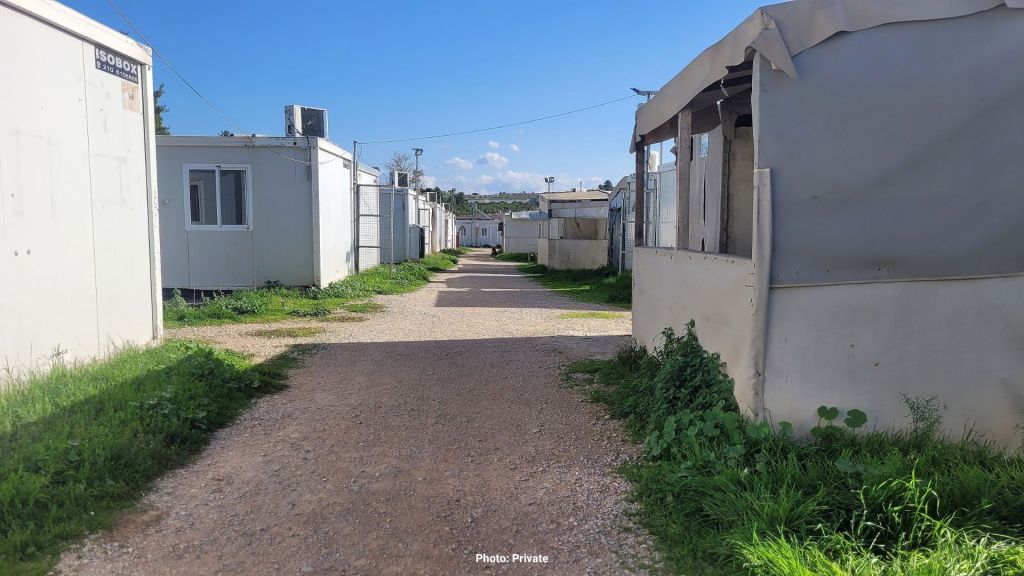
Critical conditions are reported in other mainland camps as well:
Critical conditions are reported in other mainland camps as well: “When we arrived at the camp, we had nothing. During the first month, we shared a container with another family of four. We had no blankets, pillows, towels, soap, nothing. Only cockroaches everywhere. I still haven’t managed to get rid of them… We had to find everything we needed ourselves, asking other refugees leaving the camp to give us what they couldn’t take with them, or seeking help from small humanitarian organizations outside the camp. Also, if something breaks inside the container – like the fridge or air conditioning/heating – you have to wait months for it to be fixed or replaced.”
Laila*,
residing in the “old Malakasa camp” located near the RIC
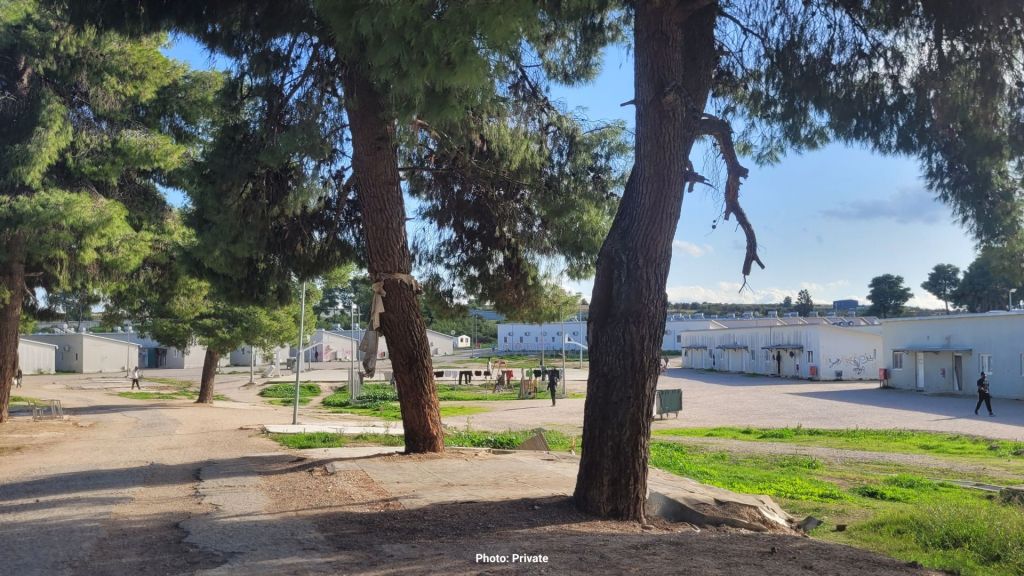
“There are cockroaches everywhere running up and down the walls of our room, so we cannot keep food for more than a day. They gave us shampoo once, but we haven’t received any hygiene items or cleaning products. The shared toilets are dirty. Sometimes there is no water in the bathrooms. Many women get urinary tract infections. Many people also have skin problems. We have nothing except a room with three beds and a fridge. Now that winter is coming and it’s cold, we have no clothes, so we mostly stay inside. I told the camp I needed clothes for my child. Because she is sick and weak, she gets sick very quickly. But they told me they don’t have clothes in her size.”
Feruza*,
a refugee residing in the Oinofyta camp
At the same time, people seeking protection in Greece have been denied access to reception conditions despite having requested accommodation from the Greek authorities. For example, asylum seekers from Yemen who were arbitrarily detained in the Pre-Removal Detention Centre (PRDC) of Amygdaleza during the application of the unlawful three-month asylum suspension introduced in mid-July 2025 were released in mid-October without being provided accommodation, and were instructed to report to the Regional Asylum Office of Attica. Upon arrival there, they requested accommodation but the Asylum Service informed them that no places were available.
Constant disruption of crucial services
Cash assistance
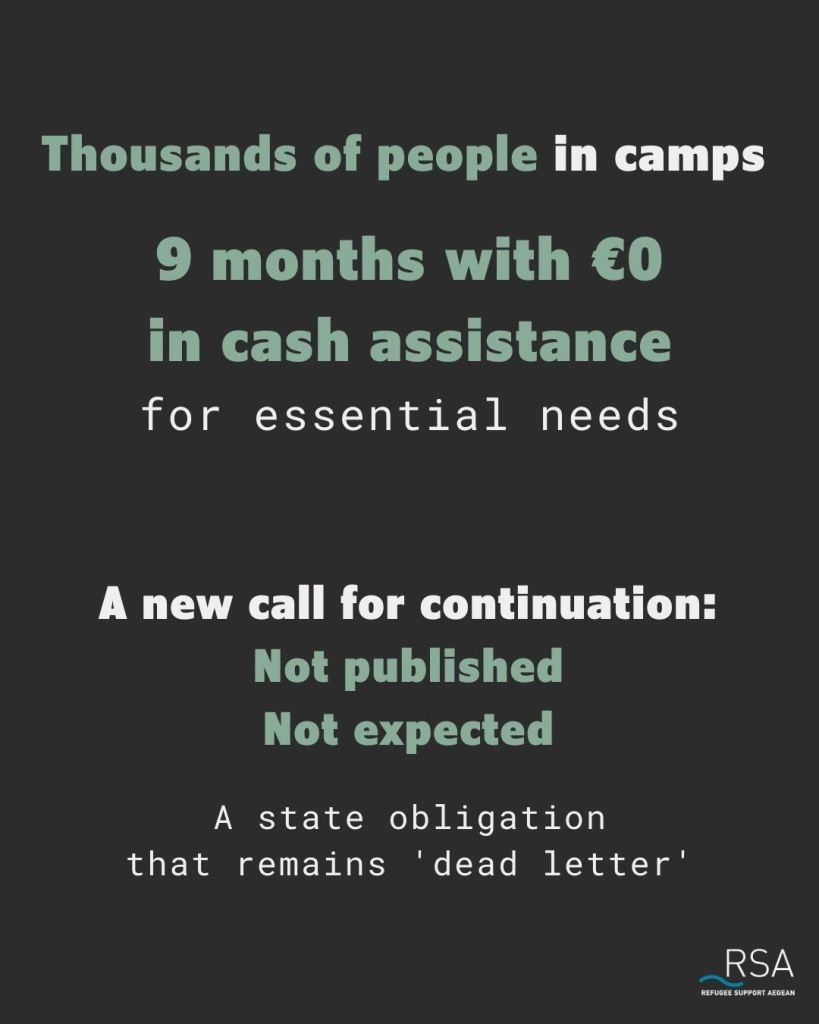
The monthly cash assistance that the Greek state must provide to asylum seekers to cover their daily expenses has been halted completely. We recall that the disbursement of this monthly 75 € assistance per adult had already been suspended for seven months in 2024. The cash assistance programme funded by the EU Asylum, Migration and Integration Fund (AMIF) came to a close at the end of March 2025. Since then, no payments have been made to the entire asylum-seeking population, nor has a new call been published or is soon expected from the Ministry of Migration and Asylum for its continuation.
According to the European Commission, the Ministry refers to ongoing decision-making regarding the selection of the future partner enlisted for the delivery of cash assistance. No concrete measures have been communicated on how this service will be restored in the future.2
In practice, this means that the tens of thousands of asylum seekers residing in camps across Greece have not received any payments for the last nine months to cover basic living expenses such as medication or necessary transportation, and are not expected to receive any in the near future.
Transport services
“To get to the specialised paediatric hospital in Athens, we have to walk for 30 minutes and then take the train. The ticket costs 4.90 € each way for one person. This means we need 19.60 € every time we go to the hospital. But we never received any money at all from the Greek state. We had to borrow from others to pay for the transport to the hospital on the few occasions when we had no other choice and absolutely had to go.”
Feruza*,
from Afghanistan, mother of a one-year-old child with severe health issues and herself living with diabetes in the Oinofyta camp
Transportation of camp residents to cities for essential needs such as medical appointments or registrations and interviews at the Asylum Service is equally suspended. That is since the relevant AMIF-funded programme of the RIS remains out of operation. In a similar vein, the RIS does not cover transfers of residents from the camps to Hellenic Police services such as the Aliens Directorate of Attica for the purpose of submitting documents and fingerprinting for issuance of residence permits or travel documents, nor to the Asylum Service for collection of said documents. People granted international protection are expected to cover these costs on their own, even though they have never received the monthly cash assistance they were entitled to during the asylum procedure.
Interpretation
RIS facilities continue to operate without state-funded interpretation services, as the long-standing issues around the reinstatement of NGO METAdrasi interpreters in Ministry of Migration and Asylum services remain unresolved. Gaps in interpretation services have been recurring from 2023 to present. Needs in the camps and at the Asylum Service continue to be covered through emergency support by personnel deployed by the European Union Agency for Asylum (EUAA).
These serious systemic deficiencies in the Greek reception system, coupled with the lack of sufficient political commitment and funding, generate cumulative barriers that deprive camp residents of essential rights and services. Despite the fact that staff in the camps (at least in several camps where RSA clients reside) act conscientiously, demonstrate good cooperation and often work beyond the requirements of their formal tasks, their positive contribution cannot suffice to remedy structural shortcomings.
No alternatives for vulnerable people
“They gave us a special diet for the child. They told us to give her only soft food along with milk. But we only have the food we receive from the camp. It is not possible for us to follow a special diet.”
Feruza*,
from Afghanistan, mother of a one-year-old child with serious health problems and herself living with diabetes
Almost 9,000 people were registered as vulnerable during screening procedures in the first nine months of 2025, according to official RIS data. The main categories of vulnerable individuals identified throughout the year were survivors of torture and violence, unaccompanied children, and single-parent families:
Yet, refugee camps remain the sole form of accommodation provided to asylum seekers beyond unaccompanied children.
The Ministry of Migration and Asylum consistently repeats that “all residents belonging to vulnerable groups received special conditions”. However, the authorities have yet to clarify how “special reception conditions” (to be) afforded to vulnerable individuals in camps differ from the general conditions provided to the rest of the population housed in the same spaces. In our experience, in the absence of alternative accommodation options, treatment of these individuals e.g. survivors of torture or violence cannot meaningfully differ from the general conditions prevailing in the camps.
At the time of writing, three years since the Ministry of Migration and Asylum assurances, the “Stirixis” programme aimed at restoring 500 accommodation places in apartments for vulnerable individuals has not been launched, nor has any related call for proposals been issued.
As Laila*, 44, a single parent of three children from Syria, told us: “I survived torture and violence in every possible form. We left Syria because our lives were threatened. My body and my mind are in pain. All of us need a psychologist – and my children too – but not now, not in this situation, not under these living conditions. Right now I cannot manage both survival and trauma at the same time. When I had my asylum interview, I became ill for seven days afterwards because I had to remember everything again. However, there is no psychologist in the camp and we cannot go to the hospitals in Athens.”
Laila*,
44, a single parent of three children from Syria
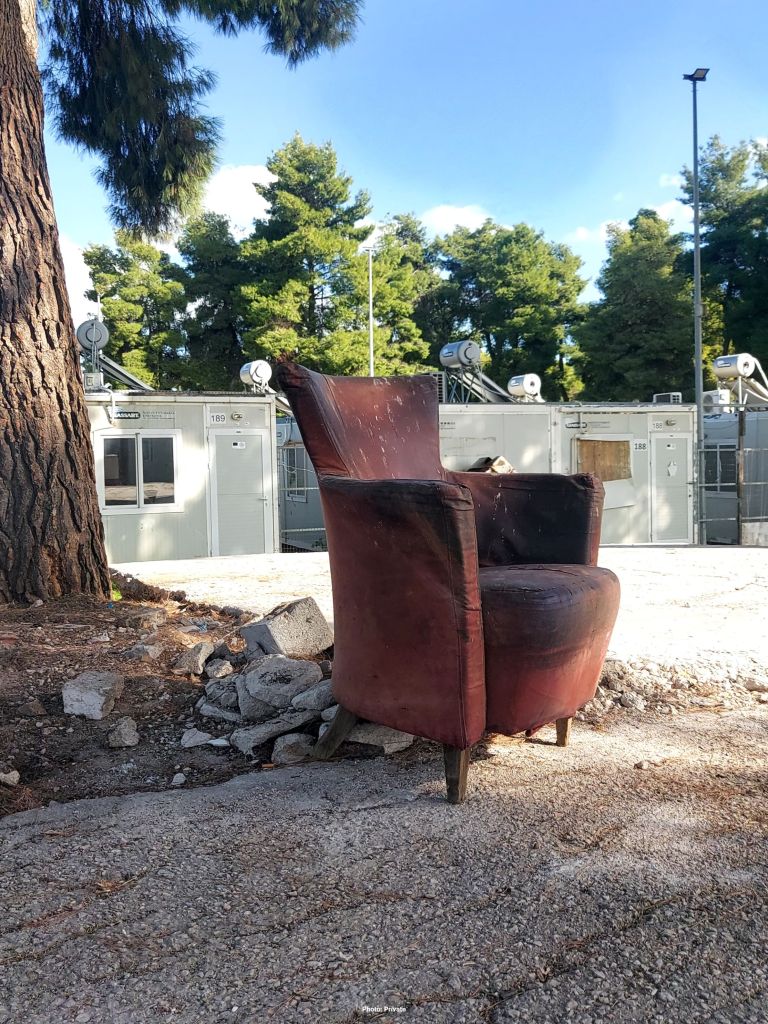
How can people claim reception conditions?
Asylum seekers have no effective legal remedies to claim dignified reception conditions in Greece. This is confirmed by the Committee of Ministers of the Council of Europe, responsible for monitoring the state’s compliance with repeated condemnation judgments issued by the European Court of Human Rights (ECtHR).
The Committee of Ministers of the Council of Europe also emphasises that the Fundamental Rights Officer (FRO) established within the Ministry of Migration and Asylum does not constitute an effective mechanism for protection. Poor reception conditions for asylum seekers are the principal subject matter of complaints submitted to the FRO in the two years of operation of its complaints mechanism. Following a preliminary assessment, the FRO must transmit admissible complaints to the National Transparency Authority or to another competent authority for processing. In practice, however, the overwhelming majority of admissible complaints against services of the Ministry of Migration and Asylum are forwarded by the FRO for further review within the Ministry itself.
12 out of a total of 19 admissible complaints have been forwarded to the Secretariat-General for Reception of Asylum Seekers.3 These complaints appear to be closed upon receipt of the response from the Secretariat-General without any substantive determination of human rights violations and without resolution of the alleged problem. A typical example may be drawn from complaints by asylum seekers regarding non-disbursement of the financial allowance. The Secretariat-General for Reception of Asylum Seekers has replied to such complaints by stating that “every possible effort is made to ensure that the fundamental rights of asylum seekers are not violated by securing basic material living conditions, and it is noted that any delays in the payment of the financial allowance are exclusively due to technical problems and/or external factors, with the Service taking all necessary measures to address the situation in support of all asylum seekers,”4 without providing any clarification regarding the actual payment of the allowance.
The European dimension and “Dublin returns”
The dysfunctions in the Greek reception system carry a significant European dimension since Greece receives thousands of incoming requests each year from other European Union (EU) countries for return of asylum seekers under the Dublin Regulation. In 2024 alone, the Greek authorities received 17,163 incoming Dublin requests. The vast majority of these requests concern individuals who initially sought asylum in Greece and subsequently moved to another EU country, and whose protection claims must be examined by Greece under the Dublin Regulation.
Last month, the European Commission announced the launch of the first EU Asylum and Migration Management Cycle under the Asylum and Migration Management Regulation, the successor to the Dublin Regulation. The Asylum and Migration Management Cycle determines, among others, the EU Member States entitled to solidarity measures from other states in the form of relocation of asylum seekers, financial assistance or technical support. These solidarity measures are decided by the Council of the EU. During the negotiations preceding the publication of the Cycle, several governments highlighted Greece’s protracted non-compliance with its obligation to accept incoming transfers of asylum seekers from other states under the Dublin Regulation and the ensuing risk of its exclusion from the solidarity measures afforded by the New Pact on Migration and Asylum to countries classified as being “under migratory pressure”. Earlier in April 2025, the European Commission already recommended the reinstatement of “Dublin returns” to Greece on the same terms as for other EU countries, despite its own repeated calls to the Greek authorities to address the “serious service gaps due to interruptions in framework agreements (e.g., interpretation, transfers, and financial assistance).”5 An increase may therefore be expected in the number of asylum seekers required to seek reception conditions in Greek camps following a forced “Dublin return” to Greece.
Concluding observations
“On the day we received our asylum decisions, I asked if they could help us at the camp to find a house or a job. They told us, ‘No, you have to manage on your own.’ Soon they will also cut our food allowance, and then we will end up on the streets.”
Feruza*,
from Afghanistan, mother of a one-year-old child with serious health problems, and living with diabetes herself
This analysis has demonstrated that the current Greek reception model does not meet minimum legal standards and ultimately fails to fulfil its purpose of ensuring protection and dignified living conditions for people arriving in Greece in search of refuge. On the contrary, underlying the Greek camp system is a widespread lack of access to reception conditions for asylum seekers, compounded by understaffed facilities, failure to provide financial allowances, insufficient connectivity with urban services, systematic interruption of basic services, and an absence of measures to support (pre-)integration of those granted international protection.
We reiterate that a decentralised urban reception system, as previously tested and successfully implemented through the ESTIA programme and through use of available EU and national funding opportunities and buy-in from local authorities across Greece, is necessary for the country’s transition to a framework that guarantees efficiency and respect for human rights.
*Names have been changed to protect safety and privacy.
Notes
- European Commission, 2nd Meeting of the HOME-Greece Steering Committee on the Pact, Ares(2024)7686884, 26 September 2024.
- Minutes of the CEAS Sub-Working Group Meeting of the Legal Aid Working Group (LAWG), 17 November 2025, Item 1.5.
- Ministry of Migration and Asylum, Information Note of the Fundamental Rights Officer to the Special Committee on Compliance with Fundamental Rights, 26 August 2025.
- Ministry of Migration and Asylum, Update on the Response of the Secretariat-General for Reception of Asylum Seekers following the transmission of complaint no. 5940/05.05.2025, 9625/2025, 31 July 2025; Update on the Response of the Secretariat-General for Reception of Asylum Seekers following the transmission of complaint no. 5574/28.04.2025, 9623/2025, 31 July 2025.
- European Commission, Mission Report: Technical visit to Samos and Athens – September 2024, Ares(2024)6443981, 11 September 2024.